I’ve always been partial to the year 1941. That would be 85 years ago. My personal reason – I was born that year. But there were other key events. For example…
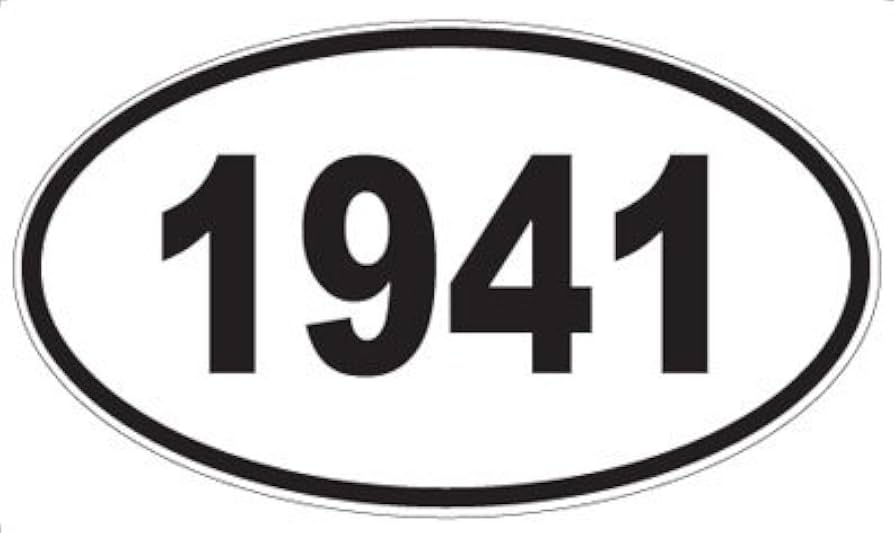
January 3 – Senator Harry Truman began his second term in Congress and chaired the famed “Truman Committee” on waste, fraud and corruption in defense contracts and production.
May 15 – Game 1 of Joe DiMaggio’s 56-game hitting streak.
May 24 – Robert Zimmerman (Bob Dylan) born in Hibbing, Minnesota.
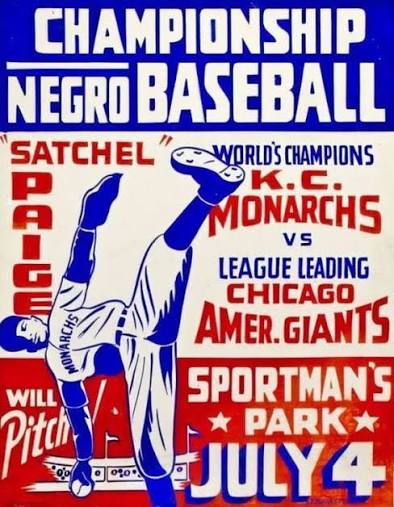
July 4 – Satchel Paige and the Monarchs played the Chicago American Giants in St. Louis.
July 4 – Lonnie’s mother Katie’s 20th birthday (Rita always said mom was a firecracker).
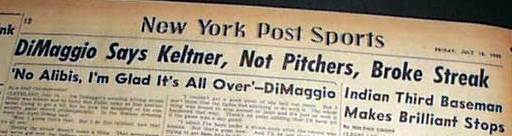
July 17 – Joe DiMaggio went hitless to end his streak at 56 games.
August 9 – Lonnie born in Kansas City, Missouri. So, I missed all of Joe’s streak.
September 28 – Ted Williams ended his 1941 season with a batting average of .406. I was around for part of this.
December 7 – Beyond the scope of this post, but an important date for Harry Truman’s future.
1941 World Series: The Yankees and Dodgers played in their first (of seven) “Subway Series,” illustrated on the scorecard with a colonial figure straddling the Brooklyn Bridge and the East River.
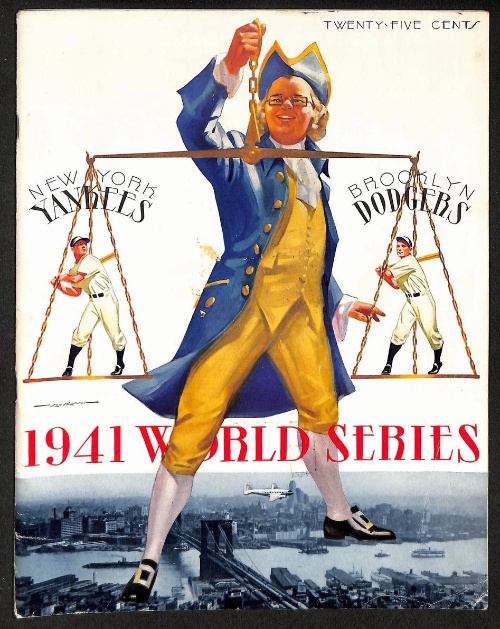
The Yankees won the Series, but in a way, that part was boring. They had also won the World Series in five of the previous six years.
Two bigger stories commenced on May 15 when Joe DiMaggio (Yankees) and Ted Williams (Red Sox) each began a hitting streak. They continued to hit in every game until they had matching 23-game streaks. Then Ted went hitless to end his streak, but both players went on to finish two of the most memorable individual baseball seasons.
Joe DiMaggio’s 56-Game Hitting Streak: As almost every serious baseball fan knows, Joe DiMaggio hit in a record 56 straight games in 1941. The longest since then? Pete Rose with 44 in 1978. For the Royals, George Brett had a 30-game streak in 1980 and Whit Merrifield hit in 31 straight in 2019.
DiMaggio’s batting average during the streak was .408, and he finished the season at .357. During the 56 games of the DiMaggio streak, Ted Williams hit .412 and finished the season at .406.
Ted Williams .406 Batting Average: Before 1941, the last AL player to hit .400 or better had been Detroit’s Harry Heilmann in 1923 (.403). In the NL, it was Bill Terry of the Giants in 1930 (.401).
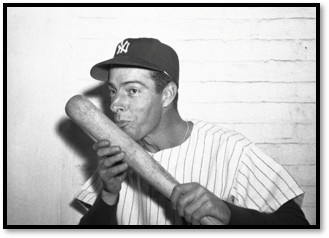
Entering the last day of the 1941 regular season, Ted Williams was hitting .39955. He played in a doubleheader, going 6 for 8 to end the season at .406 (video here). Below, Ted thanking his bat after the final games.
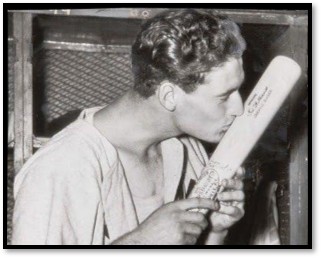
MVP – Joe or Ted?: In the AL MVP voting, DiMaggio won by a comfortable margin over Williams. Joe’s feat of 56 straight games was a singular accomplishment, while an average of .400+ had been achieved 12 times in the modern era. And of course, nobody knew in 1941 that Ted would be the last to do so in the AL or NL.
The MVP vote was moot for Joe and Ted in 1943, 1944 and 1945 because both served in WWII. DiMaggio was not a factor in 1946 when Williams easily won the MVP award. They again squared off in 1947, and although Williams clearly had the better stats, Joe won by a vote of 202-201.
Notwithstanding this competition, Williams and DiMaggio had great respect for each other. Both considered Williams to be the better hitter, but DiMaggio to be the more complete player (the Yankee Clipper was known for his graceful fielding and intelligent baserunning).
WAR and MVP: In hindsight, Ted would likely have won more MVP awards with advanced stats. WAR became a common stat in 2008 (FanGraphs, fWAR) and 2010 (Baseball-Reference, bWAR). WAR is now the most influential indicator of MVP (and Hall of Fame) voting. FanGraphs and Baseball-Reference retroactively calculated WAR for prior seasons, using slightly different formulas.

In that retroactive accounting, Williams was first in WAR in the AL in six seasons but won MVP only twice. The most egregious vote was in 1947 when Williams had a 9.5 bWAR compared to MVP DiMaggio with a 4.7 bWAR (Joe was not even in the top 10 of the AL). It was common in those days for the MVP to be on a pennant-winning roster, so a Yankee often got the award. Ted may have also lost some sportswriters’ votes because of his testy relationship with the press.
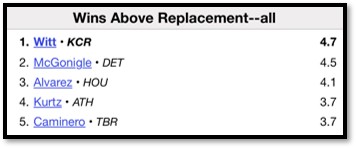
Bobby Witt Jr. and MVP: Now that WAR is commonly used, great players on bad teams (like Mike Trout) have become more competitive in MVP voting. This is the potential silver lining for Royals fans in 2026. In the last two years, Bobby Wittt Jr. has been second and fourth in AL MVP voting, losing out both times to Aaron Judge who led the league in WAR. This year, Bobby is the current WAR leader with his DiMaggio-like blend of hitting, fielding and baserunning. If he holds that lead, he will hopefully become MVP in spite of what is so far a disastrous Royals season. Although Aaron Judge is out with an injury, several other players are close behind (table below). Go Bobby!
Satchel Paige in 1941: The biggest individual draw in baseball in 1941 did not play in the NL or AL. It was Satchel Paige of the Kansas City Monarchs. His barnstorming and league play were promoted heavily. An example was on July 4 when his Kansas City Monarchs played the Chicago American Giants in St. Louis. He was the featured player on the scorecard and the advertising poster shown earlier in this post.
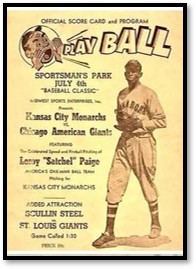
The Monarchs lineup included future Hall of Famers Satchel Paige, Hilton Smith, Willard Brown and Buck O’Neil.
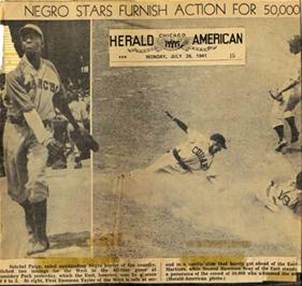
All Star Games in 1941: The MLB All-Star Game was played in Briggs Stadium in Detroit. The Negro Leagues East-West All-Star Game was played in Comiskey Park in Chicago. Each game drew over 50,000 fans!
Satchel Paige pitched two scoreless innings for the West, but his team lost to the East, 8-3. He still led the newspaper coverage.
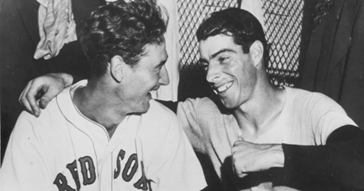
In Detroit, the NL led the AL 5-4 with two outs in the bottom of the 9th. With Joe Gordon and Joe DiMaggio on base, Ted Williams hit a 3-run walk-off homer for a 7-5 AL win. Below, Williams and DiMaggio celebrating the victory.
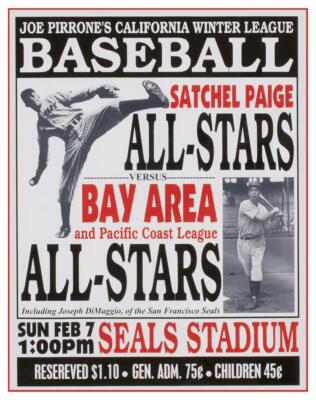
Joe DiMaggio and Satchel Paige: Before joining the Yankees in 1936, Joe DiMaggio played three seasons for the San Francisco Seals in the Pacific Coast League. In early 1936, both Joe and Satchel were playing in barnstorming games in California. The Yankees called Satchel to put together a team to see how Joe did against a pitcher like Satchel. Joe went 1 for 4, winning the 2-1 game on an infield hit in the 10th inning. Satch and Joe were both featured on this poster because Joe was also a draw. As an 18-year-old in 1933, he hit in 61 consecutive games for the Seals, five more than his 56 in 1941.
Joe faced Satchel several times in barnstorming and also after Satch arrived in the American League in 1948. Joe repeatedly said Satchel was the best pitcher he ever faced, and Larry Tye’s 2009 biography (Satchel) quotes Joe as follows: “Satch has a curve with so many bends it looks like a wiggle in a cyclone: it gave me an optical illusion. And his fast ball? Say, when he fires it, the catcher gets nothing but ashes.”
Ted Williams and Satchel Paige: Ted Willams was also a fan of Satch and other Negro Leaguers, and to his everlasting credit, he was instrumental in their inclusion in the Hall of Fame. Ted ended his Hall of Fame induction speech in 1966 with the plea that “someday the names of Satchel Paige and Josh Gibson in some way could be added as a symbol of the great Negro [Leagues] players that are not here because they were not given the chance.” Video here.
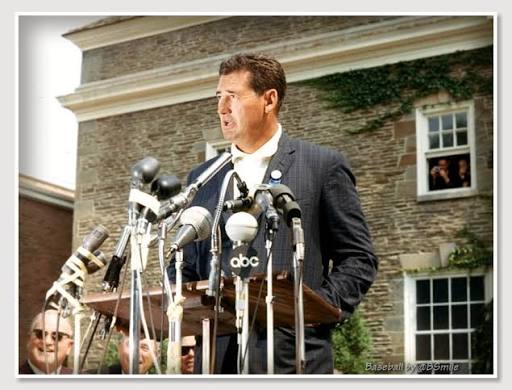
Ted’s words are considered a turning point in forcing MLB to admit Negro Leaguers into the Hall of Fame. Five years later (1971), Satchel Paige was the first Negro Leaguer inducted. Josh Gibson joined him in 1972.
Thank you Ted Williams (a/k/a Splendid Splinter, Teddy Ballgame, Thumper and The Kid).
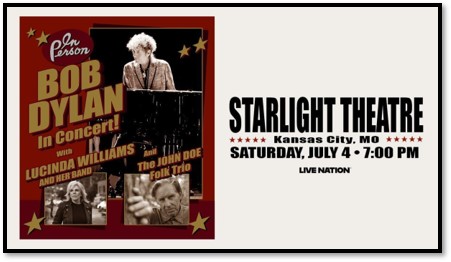
Bob Dylan in Concert: Rita and I celebrated the 4th of July by attending the Bob Dylan concert at Starlight Theater.
I am familiar with the “early” Dylan whose first big hit was “Like a Rolling Stone,” released when I was in law school in 1965. Along came others like “Lay Lady Lay,” “Knockin’ on Heaven’s Door“ and “A Hard Rain’s A-Gonna Fall.” I also knew he was a successful songwriter via covers by other artists, such as Peter, Paul and Mary (“Blowin’ in the Wind”), Jimi Hendrix (“All Along the Watchtower”), the Byrds (“Mr. Tambourine Man”) and the Turtles (“It Ain’t Me Babe”).
And of course, his work during the Civil Rights Movement. Performing as part of the March on Washington in 1963. Writing the anthem “The Times They Are A-Changin’.” Performing “Blowin’ in the Wind” with Stevie Wonder and Peter, Paul and Mary on the first celebration of the MLK holiday (click here and go to the 3:45 mark).
![Bob Dylan, Peter, Paul and Mary, and Stevie Wonder performing “Blowin' in the Wind” , Kennedy Center, Washington, D.C., January 20, 1986 - the first Martin Luther King, Jr. day [1440x985] : r/HistoryPorn](https://lonniesjukebox.com/wp-content/uploads/2026/07/bob-dylan-peter-paul-and-mary-and-stevie-wonder-1.jpeg)
But I mostly missed the “late” Dylan, the one who has kept writing and performing for another 45 years after the early Dylan. Since 1988, he has been so active touring that fans and the media often refer to it as the Never Ending Tour. In 2016, at the age of 75, he received the Nobel Prize in Literature “for having created new poetic expressions within the great American song tradition.” In 2020, at the age of 79, he released a new acclaimed album, Rough and Rowdy Ways.
And this is what drew me to see him. He’s now 85, and I gravitate to one of his early songs to describe him – “Forever Young.” That song was written as a parent to a child, but the lessons apply to Dylan’s continuing creativity.
“May you build a ladder to the stars/And climb on every rung…May you always know the truth/And see the light surrounding you…May your hands always be busy…May your heart always be joyful/May your song always be sung/And may you stay forever young.”
Dylan has elected to reinvent himself rather than retiring or becoming an oldies act. I’m reminded of the joke that the best touring cover band for the Rolling Stones is the Rolling Stones (not a dig, I’d go see them again). I admire the evolution of Bob Dylan even though I did not follow it. I think part of this is personal. I’m three months younger than Dylan. I retired from my law practice years ago but can’t seem to stop writing Hot Stoves. I know the creativity is not at Dylan’s level, but the writing excites me (no AI here). And it keeps me in touch with so many friends. If you will indulge me, it helps me stay forever young.
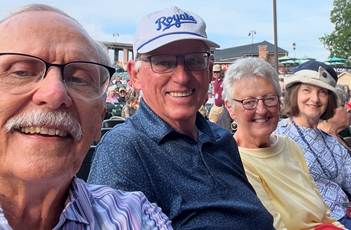
As for the concert this past Saturday, Dylan sat at a piano at the back of a dark stage with no spotlight on him. The video screens above the stage were turned off. Dylan wore a hoody, almost like he was hiding, but then the voice came on and we knew it was him. He played his usual tour setlist of songs that mostly came from the late version of Dylan. He did not speak to the crowd and quickly left the stage with no encore. None of this was a surprise – we’d read about the tour and knew what to expect. Below, with our fellow concertgoers, Cheryl Dillard and Pat Titterington. No photos were allowed once the concert started.
For Dylan aficionados, including some not yet born during early Dylan, it was a treat. Many had seen him multiple times. For late-Dylan novices like us, we got what we bargained for. An evening with a legend. So, thank you, Bob Dylan (and sorry about the fireworks that kept going off outside Starlight).
And may he stay “Forever Young” (click on the bold title to play the song and continue to do so when you see bold titles in Lonnie’s Jukebox).
Guest Columnist Steve Paul: One of those Dylan aficionados is my friend Steve Paul. Most Hot Stove readers know Steve from his 40+ years as a writer and editor at the Kansas City Star, including stints as book critic, arts editor, restaurant critic, and – before his retirement in 2016 – editorial page editor. He’s also written several books and is a regular contributor to KC Studio magazine.
More importantly for this Hot Stove, Steve has become a scholar of the Dylan catalog, including contributing papers for symposiums held by the University of Tulsa Institute for Bob Dylan Studies. This makes him the perfect guest columnist to deliver today’s Lonnie’s Jukebox. Below, before the show at Starlight, Steve and his partner and recent Dylan fan Carol Zastoupil.

Lonnie’s Jukebox – Steve Paul on Bob Dylan…
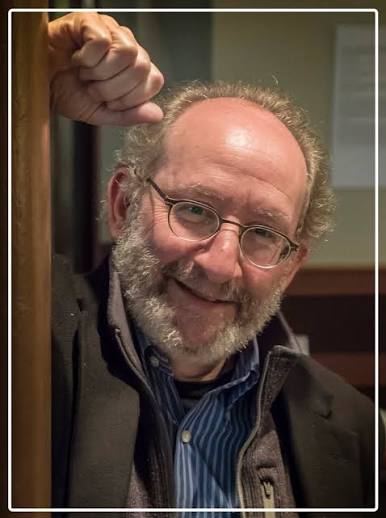
Bob Dylan turned 85 years old on May 24 this year, just a couple of weeks before setting out on another concert tour. For nearly five years, Dylan has been traveling to highlight many of the songs from his exceptional album Rough and Rowdy Ways, released in 2020. He has racked up close to 300 concerts over several legs of that tour and added dozens more by participating in Willie Nelson’s annual Outlaw Festival in recent summers.
This summer Dylan has fashioned his own version of an Outlaw tour, by inviting the likes of Lucinda Williams and John Doe (of the LA band X) to open the shows. In these Dylan summer shows, Dylan presents setlists with fewer songs from Rough and Rowdy Ways and a growing number of songs from his back catalog plus occasionally surprising covers.
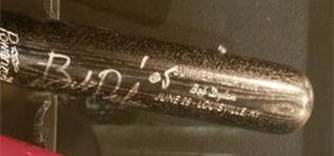
As the July 4 concert at Starlight Theatre in Kansas City approached, your Hot Stove host asked me to step in to pitch some heat and curveballs about Dylan. In case you didn’t realize that Dylan was a huge baseball fan, I offer this item I found a few years ago at the Louisville Slugger Museum in Kentucky:
The Starlight concert followed the pattern and the set list of Dylan’s most recent shows even after he downsized his band to include just one electric guitarist to replace two departed long-time sidemen. The songs have been a bit slower, his own piano playing restrained, and his voice has been placed nicely up front in the sound mix. One significant and strange difference was the unexpected accompaniment of holiday fireworks erupting outside the theater throughout much of Dylan’s show. If he noticed, he and the band didn’t seem fazed. The songs included five tracks from Rough and Rowdy Ways, covers including the Bo Diddley-related “I Can Tell” and recent additions from Dylan’s back catalog, notably “It Ain’t Me, Babe” and the closing number “I Shall Be Released,” which hammered a dominant theme of mortality. Audience members erupted in glee when Dylan pulled out his harp on that song and earlier on “Under the Red Sky,” an under-appreciated story song, with a sweet guitar line by newcomer Joel Paterson, that might have been one of the lovelier highlights except for the surprise explosions under the open Swope Park sky. (Confirmed by a bootlegged and remastered recording of the concert that suppresses much of the fireworks action.)
As for the Dylan overview, I’ll spare you the recap of his career and the rich intellectual details of Dylan thought and Dylan music that I’ve gathered in a relatively deep immersion in recent years. Suffice to say that I’ve had my ups and downs with Dylan’s chameleon and magpie moves since the mid-1960s, but my regard for him and his place in US cultural history has grown immensely.
Besides, what Lonnie really wanted is for me to get straight to the music and offer some choice Dylan listening.
With giant new releases of alternate takes, rediscovered recordings, and variations on just about everything over the last six and a half decades, zeroing in on a timeline of Dylan’s history has become extremely difficult. I’ll skip some of the well-worn and cherished tracks (“Tambourine Man,” “Blowin’ in the Wind”) in search of some lesser-known takes representing several periods in Dylan’s ever-evolving career.
To appreciate Dylan’s early appeal, it’s instructive and goosebump-inducing to listen to his 1963 Carnegie Hall concert. “Boots of Spanish Leather,” “Don’t Think Twice, It’s All Right,” “A Hard Rain’s Gonna Fall”—this is peak early Dylan with various emotional threads stemming from his love life and the anxieties of the times. Want to think about Dylan’s timelessness? Here’s “With God on Our Side.”
Dylan’s Blood on the Tracks (1974) is often considered one of his best ever, steeped in the breakup of his marriage and other tales of love and life gone awry. In our current political environment, I can’t ever refrain from hearing the refrain from “Idiot Wind” (concert version from the mid-‘70s).
The 1980s present a problematic period for Dylan followers as he emerged from his so-called Christian period, revved up his rocking sound, flailed for new identities as he toured with the Grateful Dead and Tom Petty, took, apparently, too many drugs, and yet still recorded no small amount of memorable music. At the Bob Dylan Center in Tulsa I have been mesmerized several times watching a restored video of one track, “When the Night Comes Falling From the Sky,” a rather vivid and complex breakup song from his 1986 tour with Petty, complete with sizzling backup singers and the man in black leather vest with a dangling earring. The link is to a different but still thrilling take of the same song from that tour.
On his current tour, Dylan reached back to his underappreciated 1989 album Oh Mercy to add the vaguely religious and portentous “The Man in the Long Black Coat” to his setlist. I heard it last March on its tour debut in Omaha and again Saturday night at Starlight. The link is to a bootleg from Omaha. I posted a little take on the Omaha show here.
Robert Polito’s new book, After the Flood: Inside Bob Dylan’s Memory Palace, is an impressive, thoughtful performance but probably goes a little too deep into the literary underpinnings and mysteries for casual Dylan fans. His take essentially is that Dylan’s second 30 years as an artist and performer, beginning in the 1990s, are just as vibrant and important, perhaps more so, as his first three decades.
The decade began with two acoustic albums—Good as I Been to You and World Gone Wrong—in which Dylan resets by covering old blues and folk songs as he did at the very beginning of his career. Then his songwriting begins to solidify again, and his albums, including a second one (after Oh Mercy) produced by Daniel Lanois, become startling fresh and essential. See especially Time Out of Mind, Love and Theft, and Modern Times, which ends with “Ain’t Talkin’”.
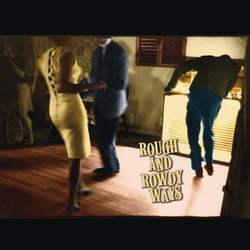
A decade ago, Dylan produced three consecutive albums paying tribute to Frank Sinatra (and perhaps secretly to Billie Holiday, as I suggested in a conference paper and recent Substack post). And when the pandemic year began disrupting everything, Dylan startled the music world with the release of “Murder Most Foul,” a 16-minute meditation on the assassination of President John F. Kennedy and the tapestry of American culture that unfolded ever since. He soon followed with Rough and Rowdy Ways, which included “Murder Most Foul” on one disc and 9 new and fascinatingly Dylanesque songs on the other. I happen to think it stands with Dylan’s very best albums, and Robert Polito certainly argues something similar. He suggests the record can rightly be seen as a more worthy Nobel Prize lecture on his art than the pat speech he submitted to Stockholm three years earlier. (See, or hear, the Whitmanesque “I Contain Multitudes” and such classical nods as “Crossing the Rubicon” and “Mother of Muses.”)
After touring on the record for so long, Dylan is now mixing it up, and I was sorry he dropped one of its highlights from the setlist—“Key West (Philosopher Pirate).” Then again, his varying performances of the song in concert rarely approach the sound he recorded for the record. Still, it’s epic (9 minutes) Dylan at his peak as a surrealist poet grounded in literary allusion and personal meditation.
Speaking of long Dylan tracks, I’m always impressed to discover new and established artists taking on Dylan’s work as if it’s a rite of passage. I loved a pandemic-era record of Dylan covers—the Australian-Nashvillean Emma Swift’s Blonde on the Tracks, which was so up to date it included “I Contain Multitudes” from Rough and Rowdy Ways. I’ve been fortunate to attend a couple of Dylan tribute concerts in Tulsa, both of which included Emma and her hub Robyn Hitchcock, another formidable Dylan stylist. In February, the concert was devoted to the 60th anniversary of Blonde on Blonde, one of my gateway Dylan albums. I was able to capture a lovely version of “Sad-Eyed Lady of the Lowlands” delivered by Natalie Merchant. Listen to this and just tell me that Dylan no longer matters.
THANK YOU STEVE!
Walk-Off Fun: Below, the Kauffman Stadium scoreboard at the end of yesterday’s game. For the second time in franchise history, the Royals scored in every inning.