Happy St. Patrick’s Day!
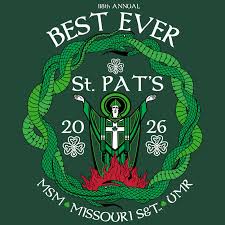
I went to my first St. Patrick’s Day parade in 1960. It was in Rolla, Missouri. I was a freshman engineering student at the Missouri School of Mines and Metallurgy (MSM). The biggest party weekend each year at the school was in celebration of St. Patrick’s Day. Why? St. Patrick is the patron saint of engineers. My fraternity, Sigma Nu, was a major participant in the parade (and the party weekend).
The annual Rolla parade began in 1908 and is still going strong as indicated on the poster above. In 1964, the name of the college was changed to the University of Missouri at Rolla (UMR), and then in 2008, it became Missouri University of Science and Technology (Missouri S&T). I got two degrees in engineering at the school and became a lawyer. Go figure.
The annual St. Patrick’s parade in Kansas City started in 1974 as a one-block downtown march with no floats. It has become one of the biggest in the country, and this year’s will start at 11:30 today (details here).

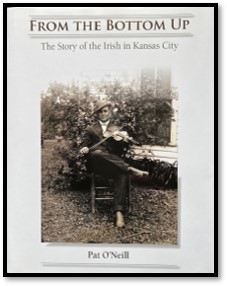
Four years ago, during St. Patrick’s week, I wrote about the inaugural KC parade (Hot Stove #187). That post also included a guest column from Pat O’Neill about the baseball teams formed by some well-known Irish politicians at the turn of the 20th century – the Pendergasts. Further evidence of Pat’s knowledge of KC’s Irish history can be found in his book, From the Bottom Up: The Story of the Irish in Kansas City (2000).
Pat’s love of baseball and everything Irish is also apparent in his 2021 book co-authored with Tom Coffman, Ted Sullivan, Barnacle of Baseball (Hot Stove review here). In the 1870s, Ted Sullivan attended college at St. Mary’s College, a Jesuit institution 90 miles west of Kansas City. From there, he began a lifelong career in baseball (playing, managing, scouting, organizing, storytelling, etc.). One of his classmates at St. Mary’s was Chicago native Charles Comiskey, son of an Irish immigrant father. Sullivan and Comiskey became close friends and often collaborated over the years in baseball matters.
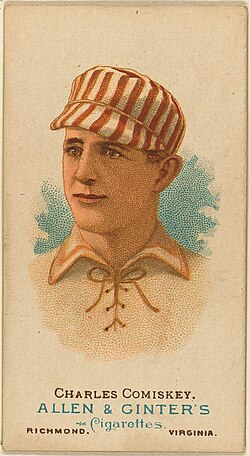
Comiskey played and managed in the 1880s, but his baseball legacy was as an owner. In 1895, he purchased the St. Paul Saints. In 1900, he moved the team to his hometown neighborhood on the South Side of Chicago and rebranded the team as the White Stockings. The next year, the team joined the newly formed American League and won the first AL pennant (that was the end of the season; the World Series did not start until 1903).
The team name was changed to the White Sox in 1904. In 1910, he built Comiskey Park which served as the home of the White Sox until 1990. Rita and I attended a game there in 1988.
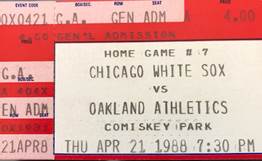
A new stadium opened in 1991 as (new) Comiskey Park, and that name stayed until 2003 (a total run of 94 years for “Comiskey”). In the 23 years since, the park’s name has changed three times (U.S. Cellular Field, Guaranteed Rate Field and Rate Field).
Pat O’Neill’s New Hot Stove Column: Today, Pat takes us back to 1901, Charles Comiskey’s first season in the American League. For spring training, Comiskey selected the spa town (mineral waters) of Excelsior Springs, about 30 miles north of Kansas City. He came back for a repeat in 1902. As you might expect, weather was an issue.
—————————————————————————————————
Excelsior Springs Was Once
Home to Spring Training Baseball
– By Pat O’Neill
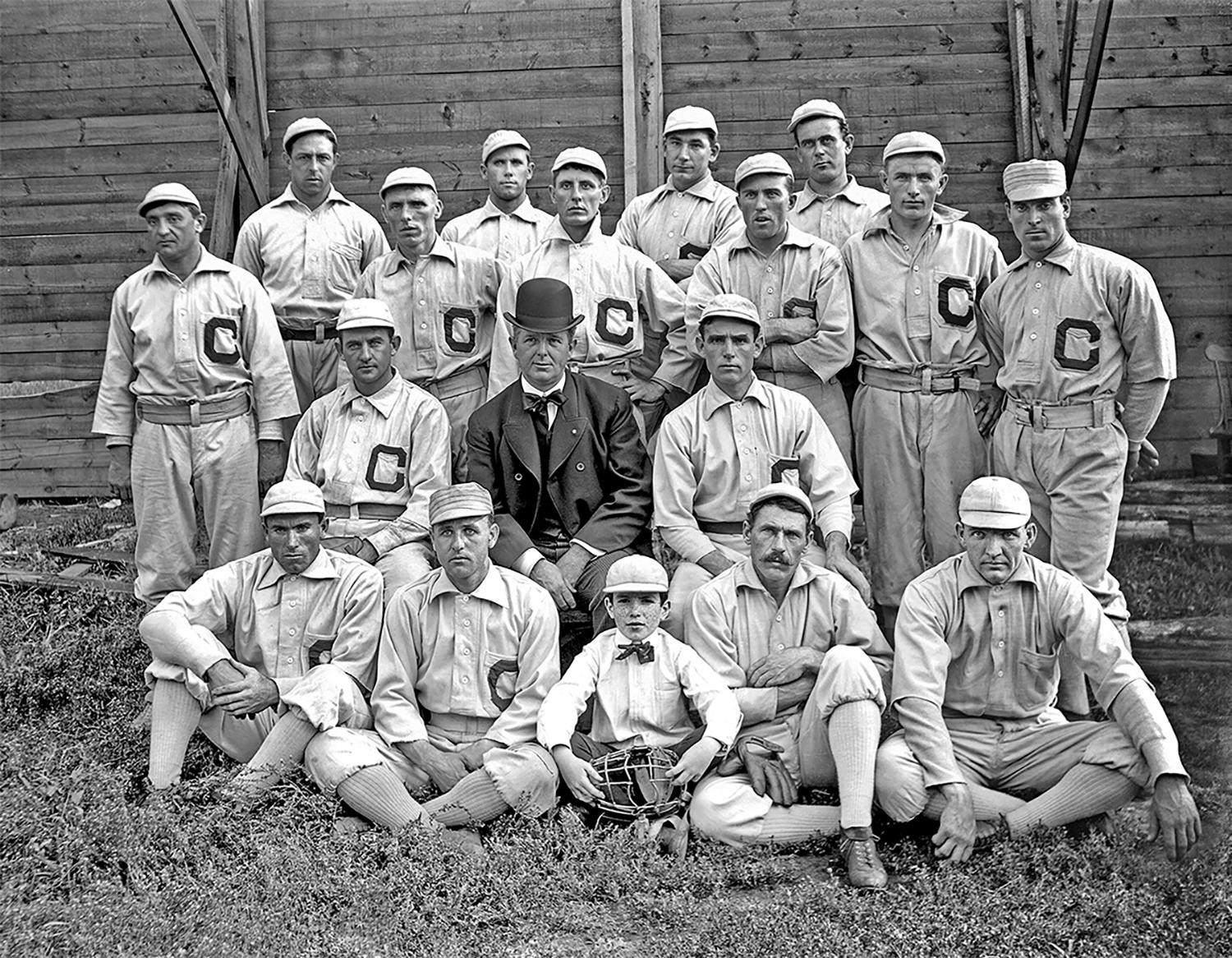
The Chicago White Stockings in 1901, the first year of American League play. Charlie
Comiskey’s White Stockings were the first major league baseball team to conduct its spring training in Excelsior Springs, Mo. FRONT ROW: Herm McFarland, Frank Shugart, unidentified team mascot, Billy “Dummy” Hoy, and Billy Sullivan. SECOND ROW: Jimmy “Nixie” Callahan, Charles Comiskey, Clark Griffith. THIRD ROW: Fred Hartman, Joe Sugden, Fielder Jones, Jimmy Burke, Roy Patterson, Clarence “Pop” Foster. BACK ROW: Sam Mertes, Frank Isbell, Jack Katoll, Wiley Platt.
In the early years of the 20th century, baseballers, footballers and prize fighters traveled from all over the country to Excelsior Springs, Missouri, to take in its famous mineral baths and train for their next opponents.
Baseball was still the king of all sports in America, so when Charlie Comiskey’s newly minted American League ball club came to the small town 35 miles north of Kansas City on the last day of March in 1901, the citizens were elated.
Papers all across the country were suddenly aware of and interested in the little spa town. The headline above a story in the Chicago Tribune read:
Excelsior Spring Is All Agog Over the Coming of the White Stockings
The article noted the town’s girls were particularly excited, as “men are not overabundant at the springs and the coming of as many as 20 men with nothing to do but practice in the afternoon is being hailed with joy.”
Comiskey’s boys of summer were to be guests of honor at the opening dance of the season at the springs’ Newton Hotel and, the paper snarked, “If enough musical instruments can be found the town band may be at the depot to toot a welcome.”
When Comiskey – who had attended and played ball at St. Mary’s College in Kansas in the 1870s – first brought his squad to “the springs” for “preliminary training” ahead of the first American League season in 1901, the scribes at the Kansas City Times boasted, “As a spring training ground for the ball teams,
Missouri is rapidly forging to the front.” The paper noted that the Minneapolis Millers were training that year in Kirksville, and the Cardinals doing their spring practicing at home in St. Louis.
The big city scribes at the Chicago Review were haughtily skeptical about small town Excelsior Springs’ accommodations:
“Excelsior Springs is not a metropolis as the world uses the term, but boasts a population from 1,200 to 5,000, according to the leading citizens imparting the
information. The ballpark is somewhat crude. Its ramshackle grandstand is about what may be expected from a town boasting the ‘champion amateur team from this part of the state.’”
Further, the weather in Excelsior Springs in late March and April tended to vary between just cold and simply atrocious.
The second day the White Stockings tried to practice in Excelsior Springs, it snowed. Early exhibition games were scheduled to be played against the University of Illinois in St. Louis and the Milwaukee Brewers in Kansas City.
Foul weather caused several contests to be cancelled, and on April 12, after less than two weeks in Excelsior Springs, the White Stockings’ player-manager, Clark Griffith, received a telegram from owner Comiskey ordering him to return the team to Chicago. Which meant cancelling a game against Milwaukee that was to be played in Kansas City the following Sunday.
On April 13, the Kansas City Journal reported, “The Chicago ball club packed up all their uniforms and bats today and left hurriedly for Chicago. The inclement weather has been a feature of the sojourn of the White Stockings. This Missouri watering place has prevented the men from working out as well as the manager would have liked.”
Gloves stolen, thieves never caught
The next day, the Detroit Free Press added that, before the team’s equipment could be loaded onto a train headed back to Chicago, “Thieves made a raid on the ball gloves owned by the Chicago American League Club at Excelsior Springs, and Comiskey will be forced to get a new consignment of mitts for his players.”
Come the regular season, the lack of practice time in Excelsior Springs didn’t show on the “wearers of the pale hose,” as some sports columnists jokingly referred to them. Comiskey’s 1901 squad won the American League’s first ever regular
season game, beating the hapless Cleveland Blues 8-2, and went on to win the first American League pennant with a record of 83-53, four games ahead of the second place Boston Americans.
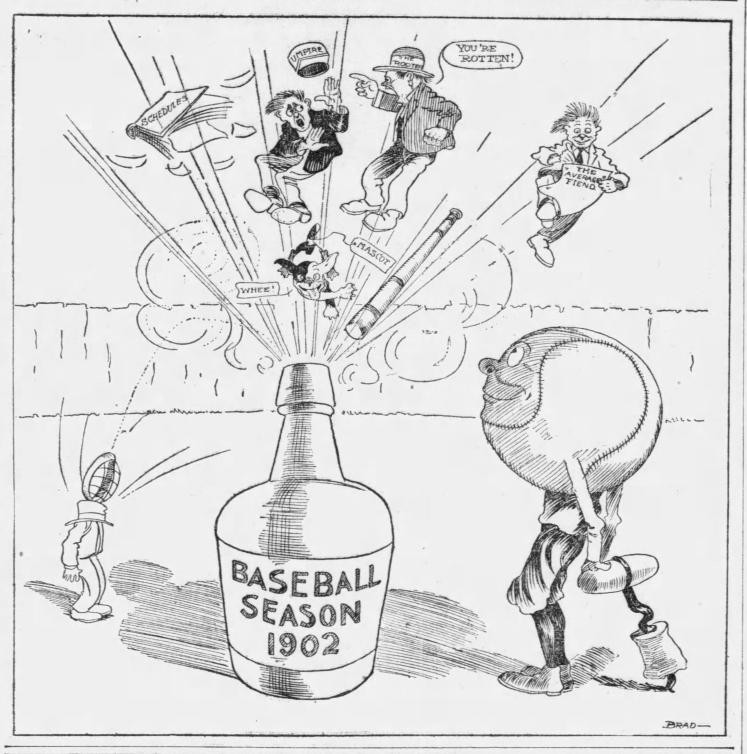
Chicago Tribune, March 30, 1902
Back to the springs in 1902
In spite of the bad experiences with the Midwestern weather and petty thieves the prior spring, Comiskey decided to return his boys to Excelsior Springs in ’02. The “Old Roman,” as he was known throughout baseball land, claimed the little spa city’s location “won the day,” as it was only 35 miles from Kansas City and only “a night’s jump” from St. Louis, allowing his White Stockings to play exhibition games in both cities. The first two pre-season games would be against Kansas City’s minor association Blues.
The Brooklyn Times Union reported on March 29 that after meeting with the American League magnates in New York, Commissioner Ban Johnson was in Excelsior Springs to “fix” the regular season schedule.
That same day Comiskey and the White Stockings left Chicago in a special sleeper car carrying what the Chicago Tribune called, “the most costly cargo of bric-a-brac that was ever shipped in one consignment. It comprised the precious arms and legs belonging to the Chicago White Stockings, twice champions of the American League, in which lies the hopes of all Chicago baseball fans for another three-time pennant winner.”
The precious commodities on board included: catchers Billy Sullivan and Eddie McFarland; player-manager Clark Griffith; pitchers Jimmy “Nixie” Callahan, Roy Patterson, and Virgil Garvin; first baseman Frank Isbell; and outfielders Dan Green, Fielder Jones and Herman McFarland. Five players missed the train, including George Davis, Tom Daly and Wiley Platt.
Veteran pitcher Wiley Platt, recovering from a bout of smallpox he contracted while hunting in Minnesota, was expected to join the team in Excelsior Springs. Comiskey was unworried about the effects of smallpox on his star pitcher’s ability to perform in 1902. ”Heck,” he said, “the dreaded disease improves a player’s physical condition… if he lives through it.”
On arrival in Excelsior Springs on March 30, the Tribune scribbler on board boasted, “There probably never was a better-looking group of ball players, so far as physical conditioning is concerned. The clear eyes, the healthy coloring which denotes the athlete, were to be seen everywhere… if there was any exception, it was Garvin, who has been studying dentistry all winter.”
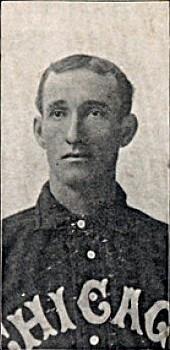
Ned Garvin, a.k.a. “The Texas Tarantula”
More likely, the notorious hothead, Virgil Lee “Ned” Garvin, had spent the winter in saloons, knocking out people’s teeth with his fist or the butt of his pistol.
In a 1902 issue of Sporting Life, W. A. Phelon Jr. wrote “Sober, the tall, spidery Texan is the gentlest and kindest of men, and wouldn’t hurt a fly. He is a gentleman and a pleasant, amiable fellow—but after he has imbibed a few
highballs he becomes a raging demon.”
Comiskey knowingly took a chance on the well-travelled Garvin that year, in hope the hard-drinking, hard throwing pitcher with a career 2.72 ERA would help the Stockings win another pennant. Nicknamed “The Texas Tarantula,” Garvin would stay on the roster clear into late August when, according to the Boston Globe, he “ran amuck with a loaded pistol,” tried to kill a policeman, and “put a bullet in the shoulder of a saloon-keeper,” and Comiskey had to fire him, reportedly telling the hangdog Garvin: “You have shot yourself out of a job.”
Deja Vu in Excelsior Springs
The Kansas City Journal reported on March 31 that the team had arrived in “the springs” during “an Easter snowstorm which left the local baseball diamond in about four inches of Clay Country mud.”
The team practiced indoors for a few days before wading onto the town’s muddy diamond where, according to the Tribune scribe on hand, manager Griffith schooled his infield “in some of the more scientific plays used in the National League.”
Four days into camp, Prussian-born Jack Katoll arrived. He seemed fit, having lost 20 pounds, but apparently hadn’t gained any smarts over the winter. Anxious to “take in the waters,” he was encouraged by teammate Frank Isbell to dive into the resort’s mineral swim tank. As the water in the tank was only three feet deep, Katoll smashed his head on the concrete bottom, acquiring a gash on his head that kept him out of practice for a day or two.
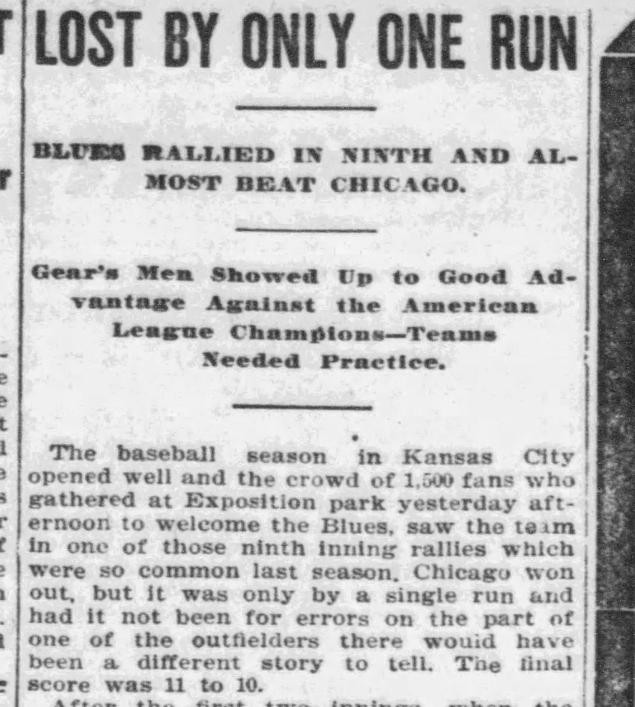
Kansas City Journal, April 6, 1902
On April 8, the Saint Paul Globe reported there had, again, been a good deal of rain in Excelsior Springs. But Griffith pronounced his boys “the finest, fittest and best-balanced baseball team in the country.”
On April 10 the team traveled to St. Joseph to play that city’s Western League team, the Saints. Despite how good Griffith said his boys were, they lost to the St.
Joe aggregation 7-8. The Times reported the St. Joe fans were “wild with
enthusiasm” to see their young players whip the socks off the American League champs.
On April 12, the men in the pale hose took on Kansas City’s new Western League team, the Blue Stockings. The Blue Stocking’s co-owner and manager was none other than future Hall of Famer, Charles Augustus “Kid” Nichols. Nichols had grown up in Kansas City before playing 15 years in the National League as a switch-hitting, right-throwing hurler for the Boston Beaneaters, the St. Louis Cardinals and the Philadelphia Phillies.
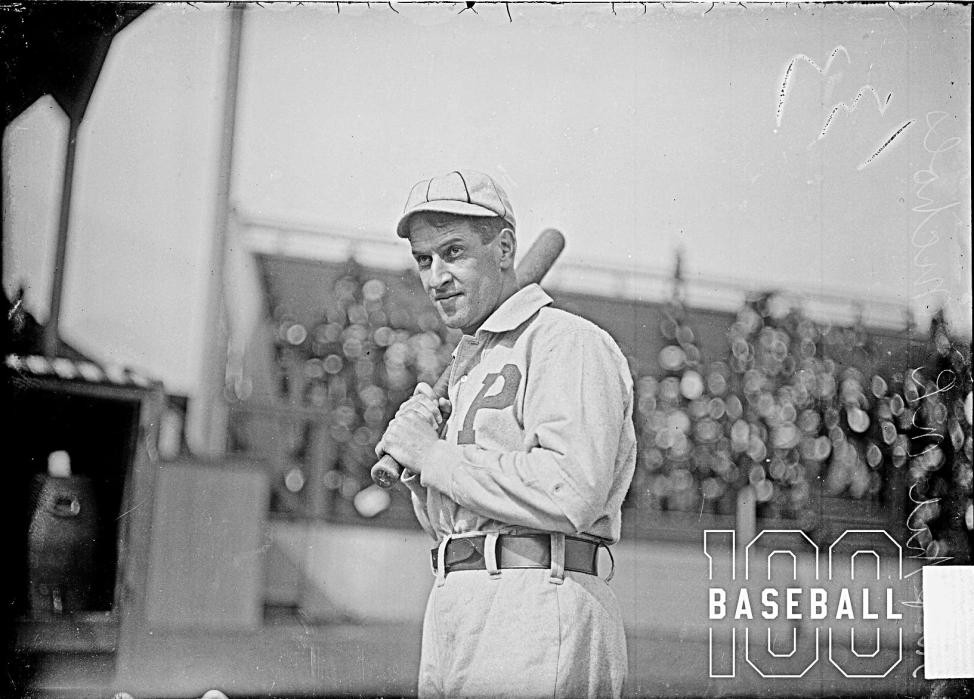
Future Hall of Famer and co-owner of the Kanas City Blue Stockings, Charles “Kid” Nichols.
Note: While his pre-season Blue Stockings got stuffed by the White ones in the two games they played in Kansas City, Nichols – in his mid-30s by then – ended up pitching for his minor association team in the regular season and won 26 games with an ERA of 1.82
A few days later, on April 14, the champs left Excelsior Springs for Notre Dame, ostensibly to school the college team on the finer points of the game. “If it’s stormy,” Griffith mused, “the champions will have the use of Notre Dame’s fine batting cages.”
It wasn’t stormy, and the White Stocking struggled to keep up with the college boys, and after 12 innings the contest ended in an 8-8 tie.
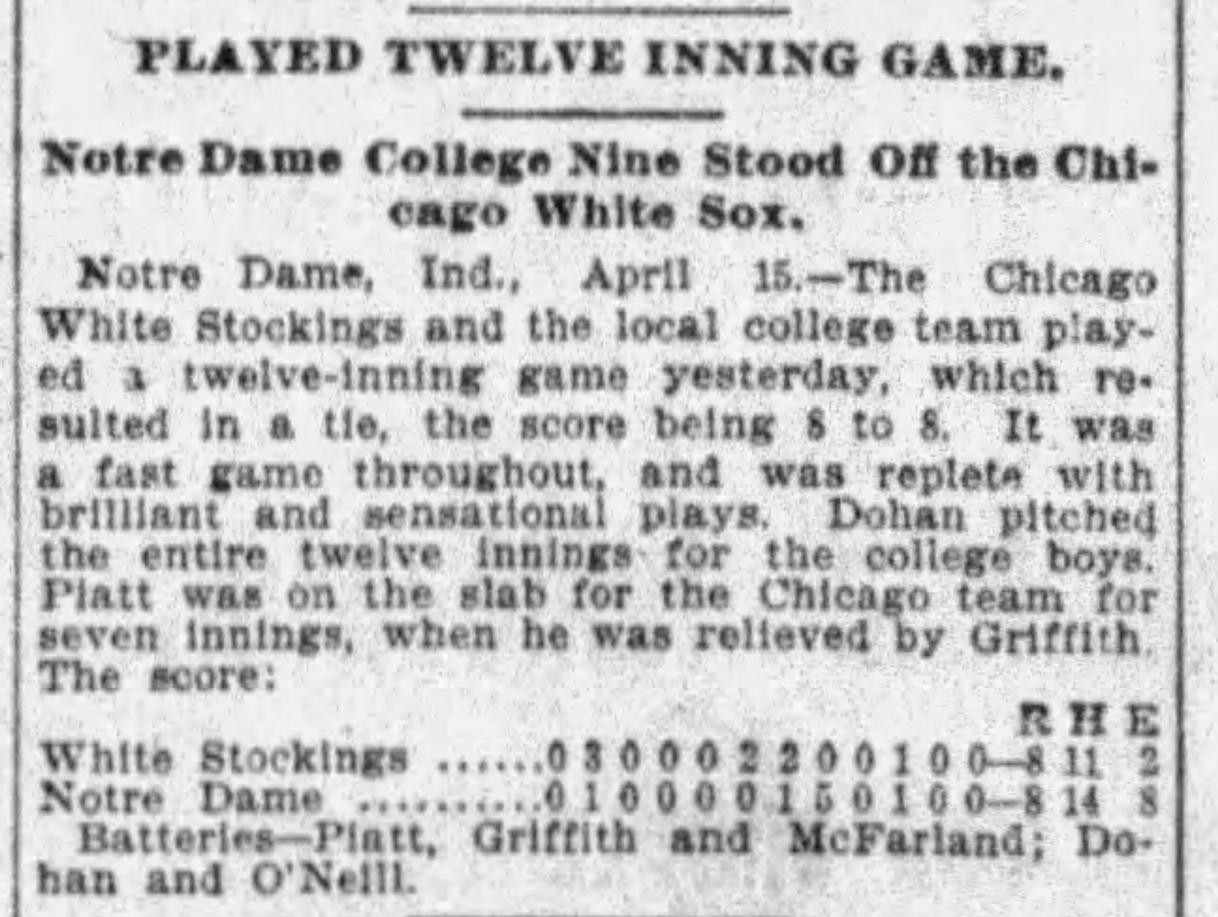
Kansas City Star, April 15, 1902
After a series of road games, Griffith’s men were feeling the strain of getting in shape. As the Chicago Tribune noted, “the twirlers Sullivan and Davis felt twitches in their salary arms.” But after a few days’ soak in the healing waters at the springs, the White Stockings headed for Kansas City’s old Exhibition Park to take on Dale Gear’s American Association Blues (not to be confused with Nichols’ Western League Kansas City Blue Stockings). Before a crowd of 3,500, Chicago’s veterans proceeded to jump on the Blues’ starter, “Old Smiles” Billy Wolf, in what the Tribune dubbed “a six-inning batting carnival” which they won by a score of 8 to 3.
In a final exhibition game at Kansas City, Chicago whipped their AL rival, the Milwaukee Brewers, before heading home to the Windy City to open the regular season against the Detroit Tigers.
Goodbye to Excelsior Springs and Missouri weather
Excelsior Springs dropped out of baseball news until early in December when the Kansas City Star announced that Comiskey’s team would not be returning to the springs in ’03:
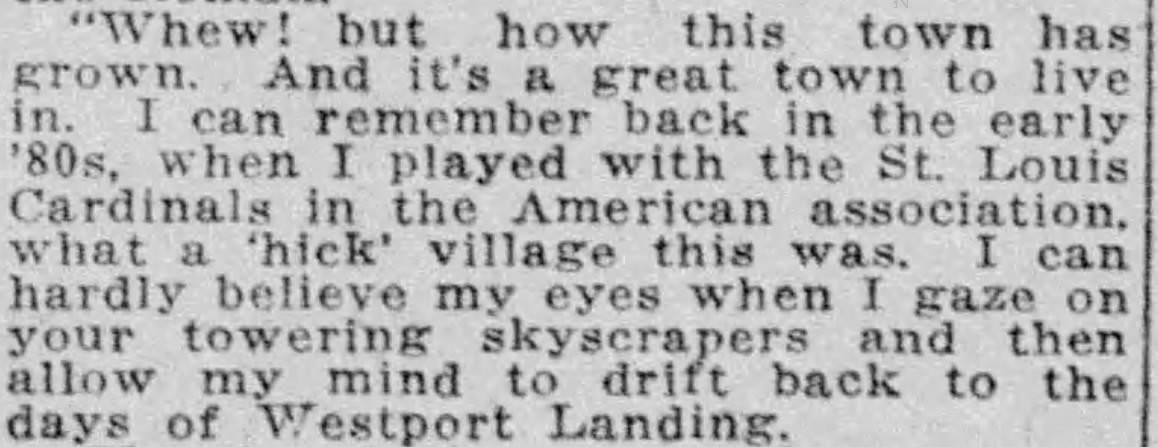
What Comiskey, by then known as “the Old Roman,” said about Kansas City when he was interviewed by the Kansas City POST in October of 1919:
————————————————————————————————–
Pat O’Neill’s Jukebox: As a bonus, Pat is also making the selections and doing the narrative for today’s jukebox. Enjoy.

Although I am a wee bit younger than Lonnie, I am old enough to remember jukeboxes. Winstead’s. Allen’s. NuWay.
But by the time “my” music came into play, we were listening to KUDL late night radio or untangling 8-tracks in players dangling under the dash of our beat-up, rusted out VWs.
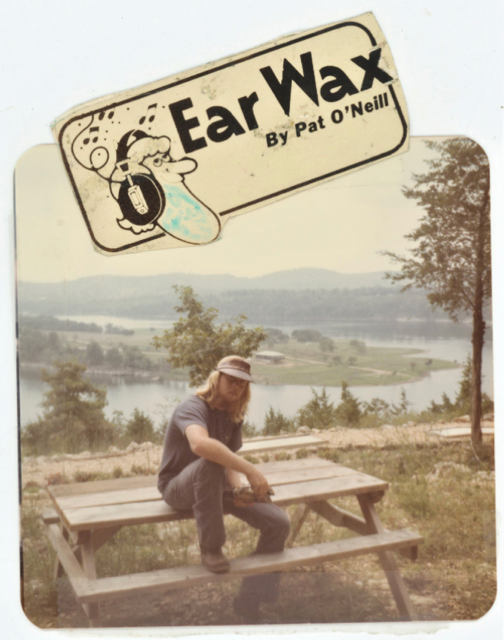
In the early to mid-1970s, I was a young – and largely clueless – record and concert reviewer for the Kansas City Times and UMKC’s U-News. Consequently, I listened to and became fond of a crazy mix of music… sometimes without the enhancement of that funny smelling stuff imported from ditches around Lawrence.
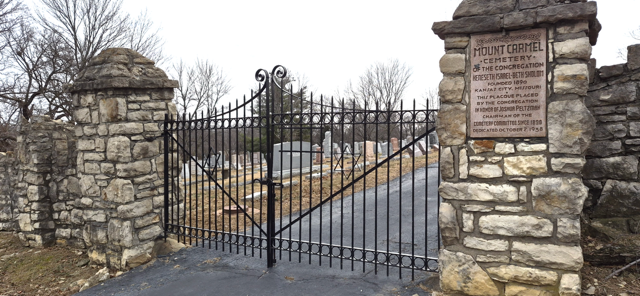
Late nights in my little office in the chapel in a cemetery (of which I was the live-in caretaker), I scribbled quick reviews after concerts by everybody from the Nitty Gritty Dirt Band and Jackson Browne, to REO Speedwagon, Crystal Gayle, Kansas and Bread.
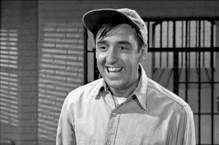
Being the low man on the Times’ music totem pole, I was often sent to review shows at the old Gold Buffet (there’s no buffet like the Gold Buffet!). I squirmed through shows by Eydie Gormé, Jim Nabors, Morey Amsterdam, Jerry Van Dyke and the Mills Brothers. But, hey, I got to eat free!
When not reviewing shows, I sometimes drove limos, schlepping the likes of The Grateful Dead, Neil Diamond and Wolfman Jack from the airport, to radio shows and performance venues..
Okay, okay, so here are some of my favorite tunes from that era:
HELLO IN THERE (and pretty much everything else by John Prine): His poignant paean to old folks tugged at my heart and never let go. Prine once explained where the song came from: “I used to help a buddy with his newspaper route, and I delivered to a Baptist old people’s home where we’d have to go room to room. And some of the patients would kind of pretend that you were a grandchild or nephew that had come to visit, instead of the guy delivering papers. That always stuck in my head.”
DUST IN THE WIND by the band, Kansas. I got to hear this great reminder of our human mortality on a four-track recording while sitting in lead signer Steve Walsh’s little duplex apartment in Topeka, before it was released on an album by the same name.
STAY by Jackson Browne. After hearing this tune with its glass-shattering chorus sung by Rosemary Butler, at Memorial Hall, I was waiting by the loading dock waiting to interview Browne, talking to who I thought was a roadie. Turned out it was him; a real genuine, nice guy.
PIECE OF MY HEART by Big Brother & The Holding Company. Janis Joplin projected pain and broken-heartedness in an almost primeval way.
SHAKEDOWN STREET by the Grateful Dead. Was never a big fan of the Dead but can’t help but strut and jive when I hear this tune.
MY GIRL by the Temptations. The best song ever for slow dancing at a high school prom. It got me a date with the cute girl I have now been married to for 55 years.
STAIRWAY TO HEAVEN by Led Zeppelin. Who doesn’t stop whatever they are doing to groove to this song?
And, in recognition of the Irish High Holy Day this month…
INTO THE MYSTIC by Van Morrison. You don’t need drugs to be carried off by Morrison’s masterpiece.
Thank you, Pat!
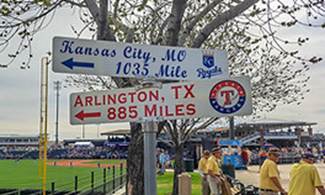
Walk-Off Photos: The Royals are winding down spring training in Surprise, Arizona. Season opener in Atlanta on March 27. Home opener on March 30.
Our boys in blue have been wowing the country in the World Baseball Classic. Bobby Witt’s fielding (click here; in one game, “two plays you might see in a year”). Jac Caglianone’s homer and epic bat flip (click here). Vinnie Pasquantino’s three homers in one game, a first in WBC history (click here for the calls in Italian).
The Royals players helped their respective teams make it to the semifinal matches:
USA (Bobby Witt Jr.) v. Dominican Republic (Carlos Estevez). Won by USA, 2-1. Bobby again (here and here).
Venezuela (Salvy Perez, Maikel Garcia and Luinder Avila) v. Italy (Vinnie Pasquantino and Jac Caglianone). Won by Venezuela, 4-2. Avila pitched 2.1 scoreless innings in relief. Garcia knocked in the go-ahead run (video here).
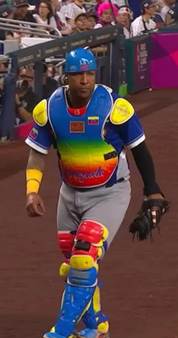
Tonight, the final, USA v. Venezuela (Fox, 7:00).