Baseball is back! Royal pitchers and catchers report today for spring training. The full squad is due on Monday, February 16.
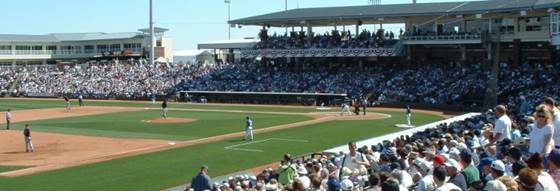
2026 Royals Spring Training – Surprise, Arizona: Since 2003, the Royals have trained in Surprise, Arizona, where they share a stadium complex with the Texas Rangers.
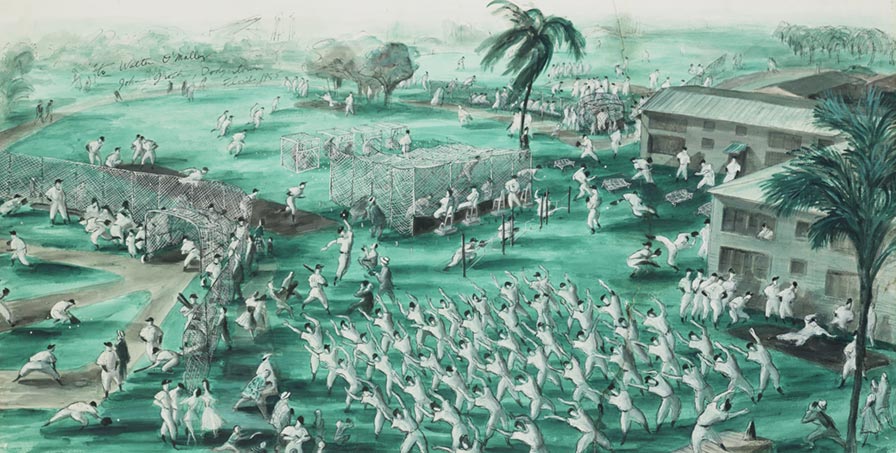
1955 Brooklyn Dodgers Spring Training – Vero Beach, Florida: After the Brooklyn Dodgers signed Jackie Robinson, they escaped Jim Crow laws in the south by holding spring training in Cuba and the Dominican Republic. For a permanent solution, they converted a former Navy barracks in Vero Beach into a self-contained city where their major and minor league players could train, dine and sleep on site. On March 31, 1948, the Dodgers played the first integrated spring training game in Florida at this complex which became known as Dodgertown.
The March 28, 1955, issue of Sports Illustrated featured a painting of Dodgertown by artist John Groth who captured “a typical day of spring training.” Later that season, the Dodgers won their first and only World Series while the team resided in Brooklyn. Since relocating to Los Angeles in 1958, they have won the World Series eight times. And with their gigantic payroll, they are favored to do it again in 2026.
1869 New York Mutuals Spring Training – New Orleans: This spring training is notable because the Mutuals are recognized as the first baseball team to hold a spring training outside of their home. The owner of the Mutuals was William M. Tweed (“Boss Tweed” of Tammany Hall) who had the team train in New Orleans. In the 1870s, several clubs followed his lead by training in warmer climates. There will be more on Boss Tweed below.
Carlos Beltran Elected to Hall of Fame: Last month, the baseball writers voted two center fielders into the Hall of Fame: (i) Andruw Jones who played most of his 17-year MLB career with Atlanta, and (ii) Carlos Beltran who played for seven teams in his 20-year MLB career that began in Kansas City.
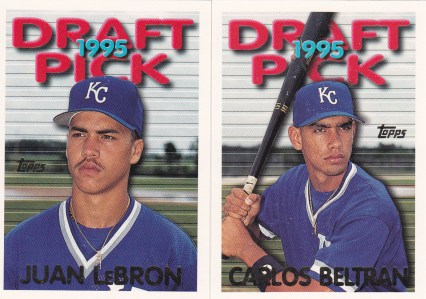
Beltran was selected by the Royals in the second round of the 1995 draft. Their first-round pick was Juan LeBron. Both players had cards in the Topps draft set that year, but there was a problem. The photos were switched, and so both cards are mistakes. LeBron was in pro ball for 12 years but never made it to the show. Beltran became a Hall of Famer.
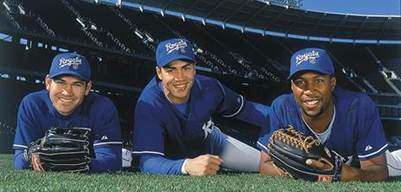
In Beltran’s first full year with the Royals in 1999, he was voted AL Rookie of the Year. He played almost seven seasons with the Royals and, in 1999 and 2000, was part of an outstanding young outfield (from left, Johnny Damon, Beltran and Jermaine Dye). [Interruption here. Could we please have a young version of any one of these for the 2026 Royals?]
On Opening Day in 2004, Beltran hit a walk-off homer for a Royals victory (video here). But he was in his last season before free agency, and the Royals were not likely to keep him for 2005. So, in June, he was traded to Houston where he helped the Astros win the AL pennant. Although the Astros then lost to the Cardinals in the World Series, Beltran excelled by hitting a record-tying eight home runs in the playoffs.
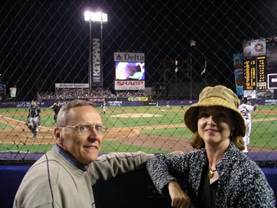
In 2005, Beltran signed with the Mets and enjoyed great success with the team over seven seasons. Rita and I saw him at Shea Stadium in April of 2007. We had good seats behind home plate and posed this photo specifically to include Carlos in the background – that’s him just to the right of Rita’s hat. Her hat caught the attention of the Kiss Cam crew, and we happily complied with the tradition for all to see on the big scoreboard screen.
After the Mets, Beltran played for four other teams before retiring in 2017. His career stats are Hall of Fame worthy. He was a nine-time All Star and three-time Gold Glove winner. His combination of speed and power was elite. Only five players have hit more than 400 home runs and stolen more than 300 bases: Barry Bonds, Alex Rodriguez, Andre Dawson, Willie Mays, and…Carlos Betran. He had a career WAR of 70.0 (Mets 31.1, Royals 24.8 and “other” 14.1).
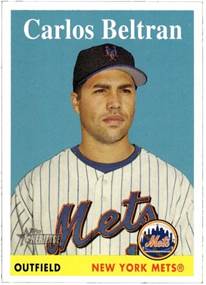
On his plaque in Cooperstown, Carlos will wear a Mets cap, but Royals fans can take pride in his time in Kansas City.
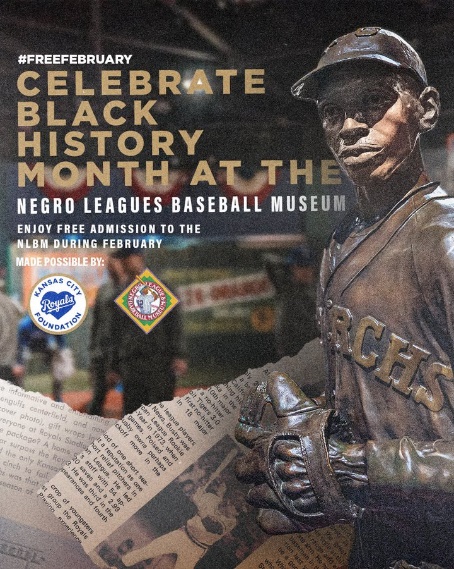
Negro Leagues Baseball Museum – Free February: For the fifth consecutive year, courtesy of the Kansas City Royals Foundation, there is free admission for all of February to the Negro Leagues Baseball Museum.
John Donaldson Day: Pursuant to legislation passed in 2025, February 20 this year (and following years) is “John Donaldson Day” in Missouri. I got the heads-up on this from Pete Gorton who has led an army of volunteers in gathering statistics on this legendary African American baseball player born in 1891 in Glasgow, Missouri. Donaldson had many ties to Kansas City, including playing for the KC-based All Nations Schmelzer’s in the 1910s. All Nations was owned by J. L. Wilkinson who later recruited Donaldson to play for the Kansas City Monarchs when the first Negro League was formed in 1920. Donaldson is given credit for the suggesting that Wilkinson name his new team the Monarchs.
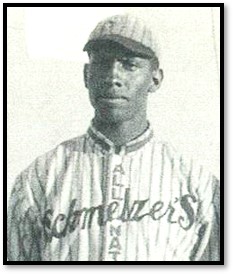
But Donaldson was not meant to be tied to one city. He mostly barnstormed, often advertised as “the greatest colored baseball player of all time,” and he was likely the highest paid Black player of his time. In the days of segregated baseball, he traveled to over 800 cities from 1908-1941, winning at least 437 games and striking out 5,341 batters (as verified by Pete Gorton’s Donaldson Network). Also see Hot Stove #49 on Donaldson plus the history of KC’s Schmelzer’s Sporting Goods owned by the ancestors of Kansas City attorney and great guy Chip Schmelzer (RIP, 2024).
Irish Update – A Barnacle, Political Bosses and a Bar: Hot Stove’s Irish/Baseball Editor is Pat O’Neill, a retired publicist and marketing executive (the title on his email signature line is “Out to pasture – retired”). But Pat keeps plenty busy writing, socializing, and doing all things Irish.
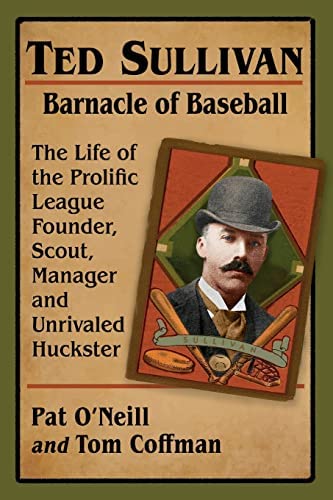
In 2021, Pat and his co-author Tom Coffman published Ted Sullivan, Barnacle of Baseball, a terrific book about an Irishman who was one of the great characters in baseball. Al Spink, writing in the Sporting News in 1909: “Sullivan’s travel and brisk acquaintance have added to his natural fund of Irish wit and made him delightful as a raconteur. No man in the baseball world can compare with Sullivan as a storyteller.” Damon Runyan dubbed him the “Barnacle of Baseball.” Click here for Hot Stove’s review of the book.
In 2022, Pat wrote a guest column in Hot Stove #187 titled “The Pendergasts Played Hardball.” Here is Pat’s opening paragraph:
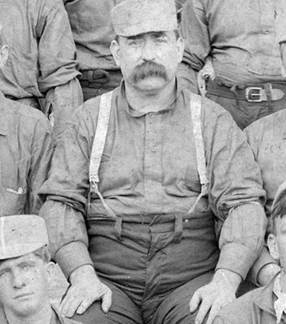
“As much as they loved settling political scores in the voting booth, the Pendergast brothers, Jim, Mike and Tom, loved playing and winning baseball games. The family patriarch – the affable and benevolent ‘Big Jim’ Pendergast – especially loved the game, and often staged contests to build teamwork among his followers at the Jackson County courthouse and his fellow aldermen at city hall.”
Below, Big Jim who played first base for the 1898 courthouse baseball team. Boss Tom was on third and Jesse James, Jr. was in center field (yes, the son of the outlaw).
The Pendergasts were not the only Irish political machine with a love for baseball. Decades earlier, Tammany Hall in New York was dominated by Irish immigrants in the mid-19th century (oddly, their leader Boss Tweed was Scottish). They were early into baseball, and I got a reminder on this in a recent post by John Thorn, MLB’s official historian. Thorn purchased at auction a pen-and-ink drawing by Tweed’s nemesis, editorial cartoonist Thomas Nast. Thorn says it depicts Boss Tweed taking on the stance of Longfellow’s Excelsior lad and holding an orb, possibly modeled after Constantine the Great, atop the Capitoline Hill, looking out over Rome. The goateed man in the drawing is likely Nast himself.
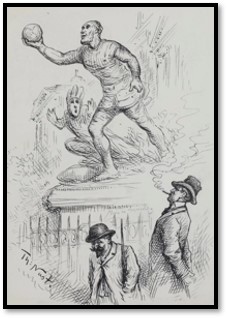
But the money-shot in the drawing is the orb. Thorn says it’s a four-panel baseball that would have been in use during Tweed’s reign over New York (1863-1871).
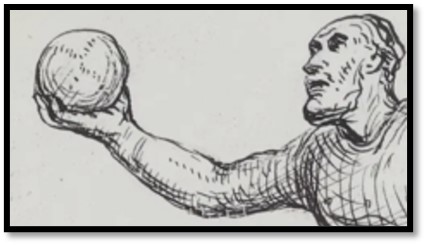
And he’s right.
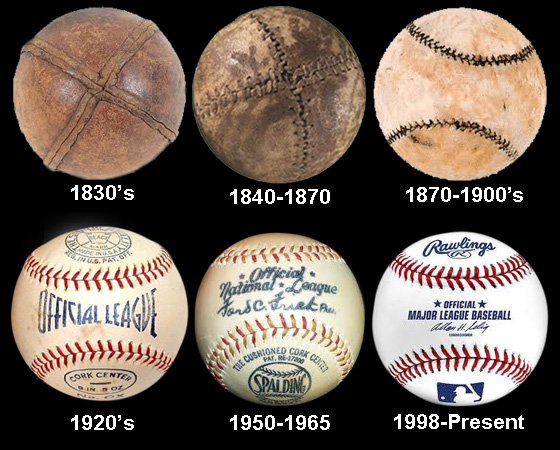
[Research Note: Much of the history below was distilled from SABR articles on Tammany Hall and biographies of the individuals. Thank you SABR.]
Baseball’s popularity grew during the Civil War, and in 1860s New York, many amateur and professional teams were connected to Tammany Hall. The teams provided a means to attract ambitious, athletically inclined young men to politics, and several prominent politicians got their start playing on Tammany teams.
Boss Tweed became the head of Tammany in 1863, and the next year became the owner of the New York Mutuals baseball team.
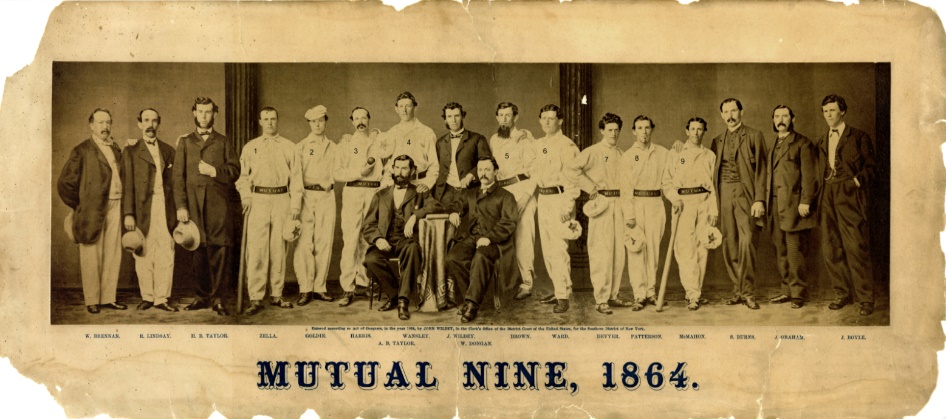
Tammany contributed generously to the team, including salaries to the players, making them a truly professional team. But Boss Tweed lost his post with Tammany and his baseball team in 1871 when his corruption caught up with him. He died in jail in 1878.
The loss of Boss Tweed did not deter the growing popularity of baseball nor the continuing power of Tammany Hall. An up-and-comer in Tammany in the 1880s was Andrew Freedman who attached himself to rising Tammany star Richard Croker (soon to become Boss Croker). They both got rich. In 1895, Freedman became the majority owner of the New York Giants of the National League (the first “major league,” founded in 1876).
Freedman’s major league monopoly in the city was threatened in the early 1900s when the American League was being formed. With his Tammany connection, Freedman was initially successful in blocking a new franchise. But after Tammany lost the 1901 election, his old friend Boss Croker headed to the British Isles, beyond the subpoena power of the new administration. This provided an opening for the American League to place a team in New York.
My story now switches to three Tammany men who would successively own the New York Highlanders/Yankees for 42 years. Bill Devery joined the NY police department in 1878 and worked his way up to (corrupt) police chief with the mentoring of Boss Croker. Devery became a business partner of “Pool Room King” Frank Ferrell who used his Tammany connections for financial success with saloons, casinos, racetracks and bookmaking. Devery and Ferrell were Irishman naturally attracted to Tammany, but our third was Jacob Ruppert who came from a German brewing family. Ruppert became a Tammany member to help get his Knickerbocker beer into Tammany bars. His beer ultimately became dominant in the market. Boss Croker put Ruppert on his finance committee alongside Giants owner Andrew Freedman and tapped Ruppert to run for Congress to cultivate the rising German vote. Ruppert served four terms (1899-1907).
Before the start of the 1903 season, Devery and Ferrell bought the AL franchise in Baltimore where it had been for the first two years of the league. They moved it to New York and named the team the Highlanders (changed to Yankees in 1913). They were poor operators and sold the team to Jacob Ruppert and Tillinghast Huston in 1915. Huston was bought out in 1923. Ruppert owned the team until his death in 1939, and his estate continued in ownership until 1945. During the Ruppert ownership, the Yankees won 14 pennants and were World Series champs 10 times. His key move was no doubt the acquisition of Babe Ruth in 1920 (below, Ruth and Ruppert).
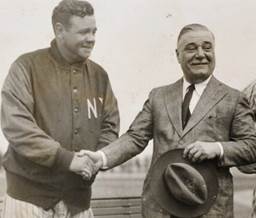
This makes for a nice segue to our next subject, an Irish bar in KC that honors Ruth.
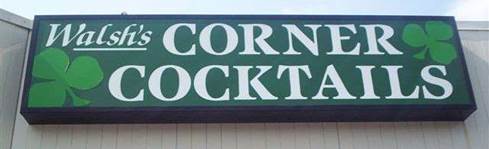
Several years ago, Pat O’Neill asked me to meet him at Walsh’s Corner Cocktails (NE corner of 85th and Wornall). He was recruiting me to be one of his manuscript readers for proofing and reviewing his Ted Sullivan book. I happily agreed. There was a second reason to be at Walsh’s. Pat wanted me to see the baseball memorabilia in the bar, especially the Babe Ruth section. For the last 40+ years, Walsh’s owner Pat Walsh has hosted a birthday party on February 6 for Babe Ruth (born 2/6/1895).
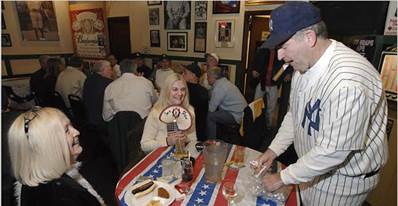
In 2007, Walsh got national attention for his birthday bash in the New York Times. The article begins with this photo showing Walsh, Ruthian cigar in mouth, serving ballpark fare to his customers. The opening paragraph reads, “It is a short argument, and Pat Walsh dares anyone to disagree with him: The New York Yankees pinstripe uniform is the best in all sports, and it was worn by the greatest baseball player that ever lived, Babe Ruth.”
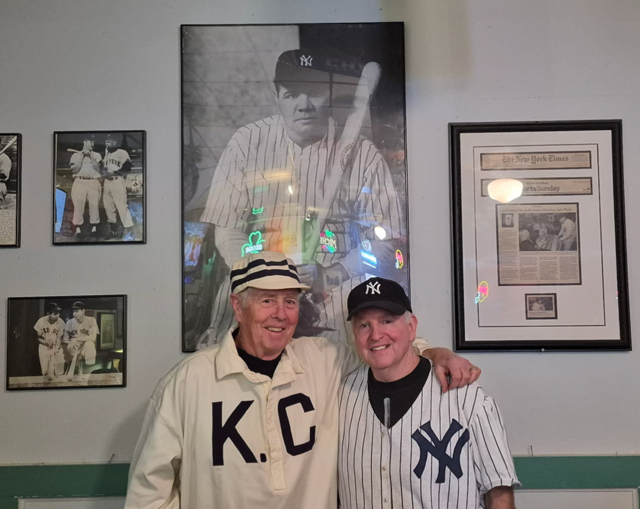
The photo below is from this year’s party held last week – Pat O’Neill is next to the pinstriped Pat Walsh in front of a Babe Ruth poster. A framed copy of the New York Times article is on the right. As for O’Neill’s uniform, he gave me this description: “A replica of the uniform worn by William ‘Billy’ O’Brien, who held down first base for the Barnacle of Baseball, Ted Sullivan’s hapless Kansas City Cowboys in 1884 and 1885. Whereas most of Billy’s fellow Cowboys soon packed their dinner cans (where the term ‘canned’ comes from) and went back to playing sandlot ball, Big (Sullivan said Billy ate like a horse) Billy went on to play for Washington and actually led the National League in home runs in 1887. But he soon outweighed the game and came back to Kansas City, where he swung a big nightstick for the KCPD.”
I’m embarrassed to say I have not been to one of these but have already calendared for next year. It will be 2027, the 100th anniversary of Babe’s 1927 season when he hit his record 60 home runs (surpassed by Roger Maris in 1961).
One More Thing from Pat O’Neill: I checked in with Pat to see if he had any new Irish/baseball stories he’d like to share. Of course he did, and here is what he sent:
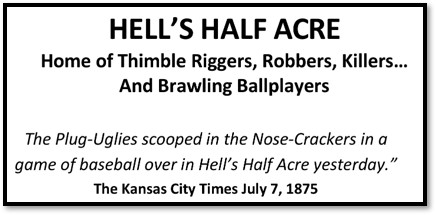
In the 1870s, while cattlemen, railroaders, land speculators, barkeeps and gamblers raked in big and small fortunes in Kansas City’s booming West Bottoms, poor black and Irish folks lived nearby in a squalid, violent, crime infested neighborhood out near the point where the Kaw and Missouri rivers meet.
It was called Hell’s Half Acre. And a veritable hell hole it was.
The Irish Police Captain Thomas Flahive described working inside the gates of hell: “Police, social service workers and missionaries dared not enter ‘The Acre’ alone, lest they come out without their guns, their purses and their faith in mankind.”
The Kansas City Evening Star added: “Into these (hovels), the class alluded to packed themselves like sardines in a box, and soon an enterprising Irishman opened a saloon, a billiard room and a bowling alley on the most prominent corner. His place became the headquarters for all the lowest thugs and petty thieves, prostitutes and general scum of society.”
And a bunch of plug-ugly ballplayers who couldn’t wait to crack your nose!
THANK YOU, PAT.
Lonnie’s Jukebox – Random Edition: Here are some random selections that came to mind recently…
“We Didn’t Start the Fire” by Billy Joel (1989). Billy Joel name-checked 59 historic figures in this song. With Brigitte Bardot’s death this past December, the survivor list was trimmed to three: Subway shooter Bernhard Getz (78) and Rock and Roll Hall of Fame singers Chubby Checker and Bob Dylan (both 84 and still actively performing). I am also surviving at 84, but I was not name-checked by Billy Joel and can’t carry a tune.
“Playing in the Band” by the Grateful Dead (live performance in 1974). When the Grateful Dead was inducted into the Rock and Roll Hall of Fame, 12 members were so honored. One was Donna Jean Godchaux, the only woman who was a regular in the band, who passed away last December. Another was founding member Bob Wier who died last month. The linked song is the two of them performing together.
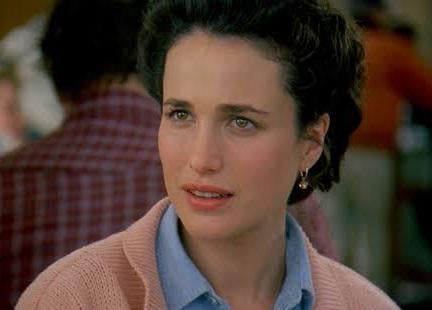
“I Got You Babe” by Sonny and Cher (with clips from the 1993 movie Groundhog Day). On February 2 each year, I send birthday greetings to Groundhog Day guys Gary Nuss and Talis Bergmanis. And I reminisce about how much I love the movie Groundhog Day (it’s in my Top 25 of all-time). I’m also a member of the Andie MacDowell fan club (Rita knows). My explanation is that “Rita” is the name of Andie’s character in the movie. But there are additional reasons.
“A Kiss at the End of the Rainbow” by Mitch and Mickey (from the 2003 movie A Mighty Wind). Mitch is Eugene Levy. Mickey is Catherine O’Hara who died last month at age 71. She was an integral part of the Christopher Guest mockumentary series that included Waiting for Guffman, Best in Show and A Mighty Wind. Rita and I rewatched all three over the last couple of weeks, and to top it off, watched a few episodes of Schitt’s Creek. Humor at its best.
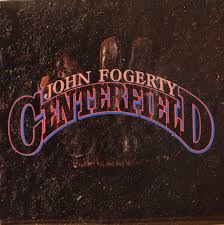
“Centerfield” by John Fogerty (1985). In honor of center fielders Carlos Beltran and Andruw Jones, both just elected to the Hall of Fame. The song is the title track to his solo album that went to #1 in 1985. The album cover features a beat-up glove, which is referenced in the song. Grammar trivia: “Center field” is most commonly spelled as two words (same for center fielder). But it is occasionally one word, as John Fogerty did with his record. And don’t be surprised if you sometimes see it hyphenated.
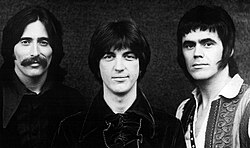
The following four songs are in memory of Chuck Negron, lead singer of Three Dog Night, who died last week at the age of 83. He and his fellow co-founders Danny Hutton and Cory Wells started Three Dog Night in 1967. They became a top record-selling band, charting 21 consecutive Top 40 hits from 1969 to 1975. Below: Negron, Wells and Hutton in 1969.
“Mama Told Me (Not to Come)” (1970).
“An Old Fashioned Love Song” (1971).
“Pieces of April” (1972).
“Joy to the World” (1970). Saved the best for last.
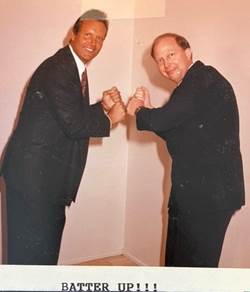
Walk-Off Photo: Walter Simpson, a law school classmate (UMKC ’67), sent me this old photo and shamelessly suggested that it should run in Hot Stove. Walter is the right-handed batter. This was taken at a charity event ages ago. George Brett now has gray hair. Walter has none.