As previously advertised, Hot Stove is celebrating the 50th anniversary of the Royals first appearance in the MLB postseason.
Hot Stove Happy Hour: JJ’s on Wednesday, September 23 (4 to 7 PM). Cash bar.
If you have not yet RSVP’d, but plan to be there, please let me know by replying to this email.
We hope to see you in the “room where it happens” (yes, a reference to the musical Hamilton; more on the way).
On a personal level, the year 1976 was also big for two of my favorite avocations.
Politics: Hot Stove welcomes Democrats, Republicans and Independents. A big tent. But I can’t talk about 1976 without referencing what else I was doing during the fall of that year. I worked on the advance staff of VP nominee Walter Mondale in the Carter/Mondale campaign. I’ve told the story before in Hot Stove, so I’ll just do the Cliff Notes version today.
And I can’t ignore the chaos of this past week and how it connects to this year’s annual MLK message that I posted eight months ago. To refresh your recollection, I lamented the resurrection of the Troost segregation line to gerrymander Emanuel Cleaver out of the seat he had held in Congress since 2005. The line separates Cleaver from much of the city he represented as mayor from 1991 to 1999.
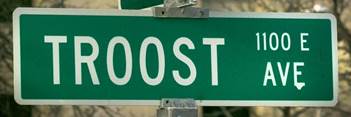
Last week, a unanimous Missouri Supreme Court put the gerrymandered map on hold, but some supporters of the Troost line have vowed to continue their fight to divide Kansas City. Stay tuned.
Rock ‘n’ Roll: Although my strongest rock ‘n’ roll memories are from the 1950s and 1960s, there were musical acts in 1976 that caught my attention. To be continued in Lonnie’s Jukebox below.
MLB Playoff Brackets: From 1903 to 1968, the MLB postseason included only two teams – the pennant winners of the American League and National League who met in the World Series.
In 1969, four expansion teams (including the Royals) increased each league to 12 teams. The two leagues were divided into East and West divisions, and a new postseason round was added – the league championship series (LCS). This was the scenario for the Royals in 1976 when they won the AL West. Spoiler alert. They lost to the Yankees in the ALCS.
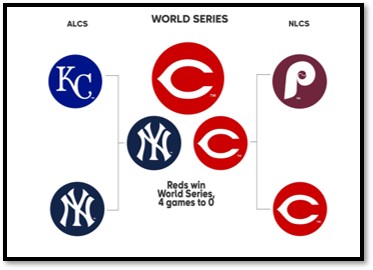
MLB later expanded to 30 teams with three five-team divisions in each league. In addition to division winners, wild card teams were added to the postseason, starting at two in 1994, then four in 2012, and the current six in 2022. So, there are now 12 teams in the postseason, and here’s how it looked last year:
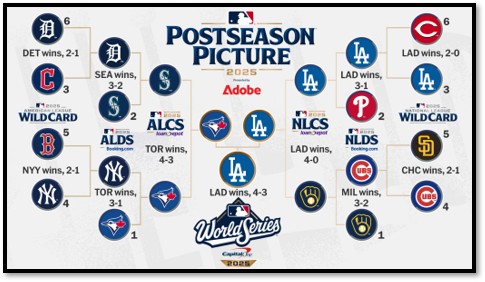
1976: 24 MLB teams with 4 teams in the postseason. Total games played in the postseason – 12.
2025: 30 MLB teams with 12 in the postseason. Total games played in the postseason – 47.
Conclusion: It was a lot harder to get to the postseason in 1976.
Building a Playoff Team: After Ewing Kauffman was granted the KC expansion franchise, he wisely hired Cedric Tallis as his general manager, saying, “Outside of finances, he will run the club.”
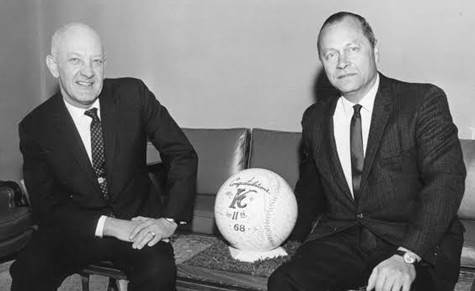
Assembling a team for the inaugural 1969 season began with the expansion draft and early moves in 1968. Tallis then used trades (T), drafts (D) and free agency (FA) to build the team.
Position Players: 1968 – Buck Martinez (T); 1969 – Amos Otis (T) and Al Cowens (D);1970 – Freddie Patek (T), Frank White (FA), Jim Wohlford (D) and Tom Poquette (D); 1971 – George Brett (D) and John Mayberry (T); 1972 Hal McRae (T).
Pitchers: 1968 – Paul Splittorff (D) and Al Fitzmorris (D); 1969 – Doug Bird (D); 1971 – Mark Littell (D); 1972 – Dennis Leonard (D); 1973 – Steve Mingori (T) and Marti Pattin (T).
In 1974, the Royals fired Cedric Tallis, but the Tallis-acquired players accounted for 17 of the top 20 Royals players in the 1976 playoff season (measured by bWAR).
Conclusion: Cedric Tallis was the architect of the 1976 team.
Winning the AL West: After a slow start in May (5-7), the Royals got hot for the next four months (71-46). They then fell off to 12-19 to finish the season 90-72, beating out the Oakland A’s in the AL West by 2.5 games.
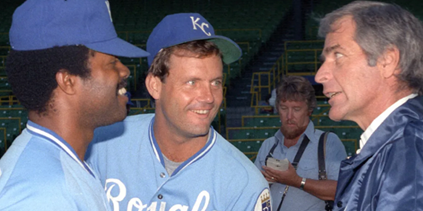
The hitting stars were George Brett and Hal McRae. Brett won the batting title on the last day of the season (.333), edging out his teammate McRae (.332). McRae led the league in on-base percentage and OPS, while George led in hits, triples and total bases. Below, George and Hal with their famed hitting coach, Charlie Lau.
In the AL MVP voting, Brett came in second, McRae third and Amos Otis seventh. George probably would have been the MVP if WAR was a stat in 1976. With retroactive accounting, Brett had a WAR of 7.5, a big margin over MVP Thurman Munson’s 5.3.
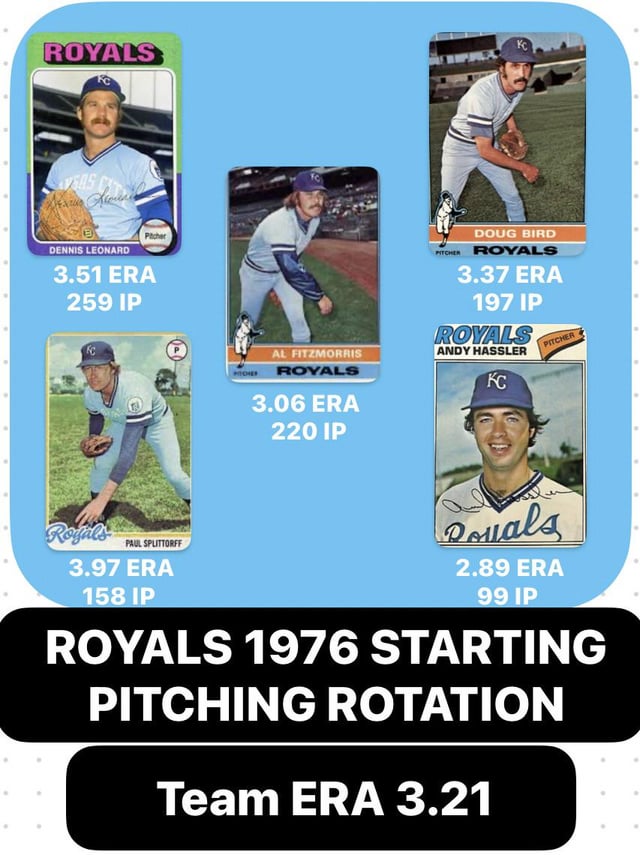
The pitching outpaced the hitting. The 1976 pitching staff had a cumulative ERA of 3.21, to this day the best in the history of the Royals.
The ALCS – Yankees v. Royals: Kansas City fans were ecstatic, and the first two games of the five-game series were at Royals Stadium in Kansas City. I don’t remember how, but I scored tickets to each game. I still have my scorecard. Cost – $1.
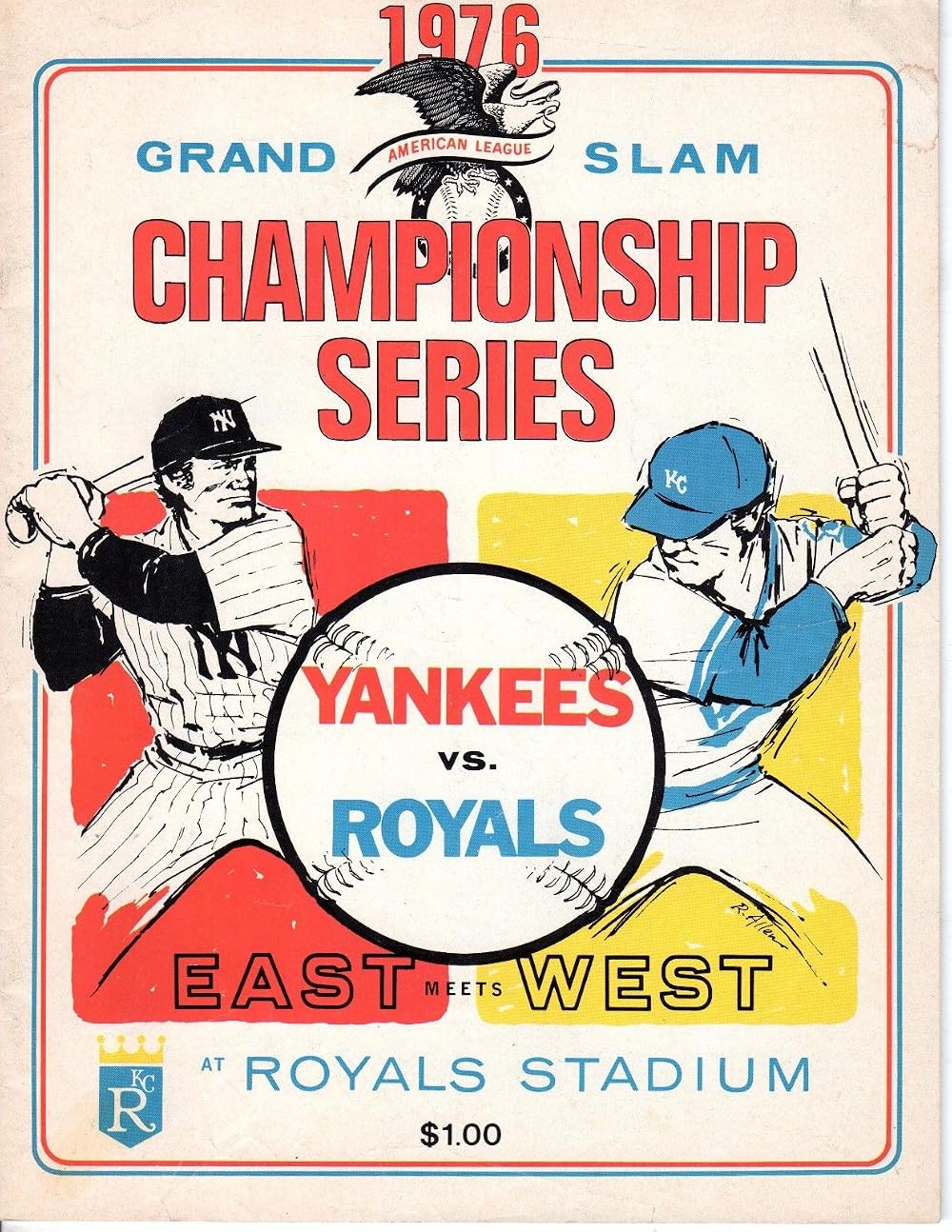
The ALCS is now a best-of-7 series, but until 1985, it was best-of-5.
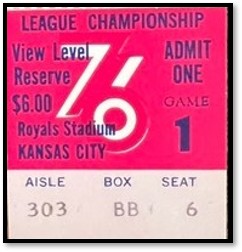
Game 1: The Yankees opened the game with two runs in the first, aided by two throwing errors by George Brett. That was all they needed as Catfish Hunter scattered five hits, gave up no walks and pitched a complete game for a 4-1 victory. Chris Chambliss went 3 for 5 for the Yankees. Ticket price – $6.
Game 2: Royals starter Dennis Leonard did not make it through three innings, allowing three runs. But Paul Splittorff and Steve Mingori hurled shutout ball in relief, and eight players in the Royals lineup had hits to contribute to a 7-3 victory. Chris Chambliss was 2 for 4. Ticket price – $8.
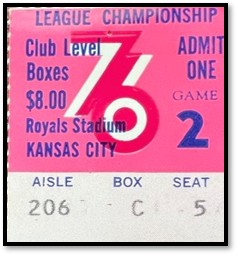
With the series tied 1-1, the teams headed to Yankee Stadium for the final three games.
Game 3: The Royals jumped off to a 3-0 lead in the first inning. They did not score again. The Yankees won 5-3 with Chris Chambliss going 2 for 4 and hitting the first home run for either team in the series.
Game 4: Game 1 starters Catfish Hunter and Larry Gura were back, but neither one made it past the third inning. Freddie Patek, Jamie Quirk and Hal McRae led the offense for a 7-4 victory. Graig Nettles hit two homers for the Yankees. Chambliss was 1 for 4. The series was tied 2-2.
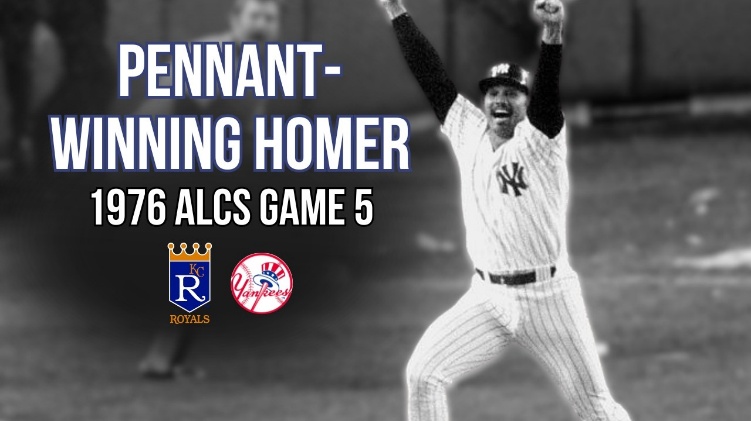
Game 5: Royals starter Dennis Leonard pitched to only three batters, allowing two runs. Relievers Paul Splittorff and Andy Hassler gave up three more for a Yankee lead of 6-3 after seven innings. In the top of the 8th, George Brett hit a three run homer to tie the game 6-6. That was still the score in the bottom of the 9th when Chris Chambliss led off against Mark Littell. Chambliss was already 2 for 4 in the game.
You of course know why I have been following Chambliss through the series. He hit Littell’s first pitch for a home run to win the ALCS for the Yankees. He was then mobbed on the field by fans and never got to home plate. Click here for the video with Phil Rizzuto’s signature “holy cow” calls.
Conclusion: Chris Chambliss was a one-man wrecking crew!
But the Royals fans had been treated to their first postseason. And it was no fluke. In the ten years from 1976 to 1985, the Royals won the AL West six times and the AL pennant twice (1980 and 1985). They won the World Series in 1985 under General Manager John Schuerholz who was originally hired for the front office by Cedric Tallis in 1969. The starting lineup for the 1985 Royals still had four Tallis-era recruits – George Brett, Hal McRae, Frank White and Willie Wilson.
The 1976 Carter/Mondale Campaign: I have been a baseball junkie since I was a kid (and still am). Starting with the election year of 1968, I became a political junkie (but today, mostly just an observer). I started with the Young Democrats and the Committee for County Progress and then worked on various campaigns and served as chair of the Jackson County Democratic Committee. This led in 1976 to a part-time position on the advance staff of VP nominee Walter Mondale.
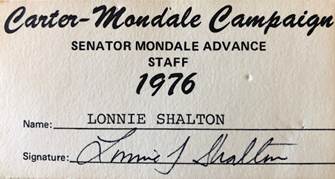
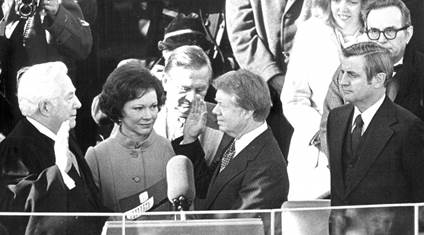
I traveled to several cities, mostly in the Midwest, to help prepare for Mondale appearances on the campaign trail (but always keeping an eye on the box scores and pennant race). A nice thank you was an invite to DC for the Inaugural, a Mondale staff party and the VP Inaugural Ball.
After the election, I went back to being a full-time lawyer and assumed my Carter/Mondale days were over. But I got a call from the White House advance office asking if I would be available for occasional advance work. I happily signed on and over the next four years made several trips. One of them would change my life – Bangkok, Thailand.
I had never been out of North America. Did not have a passport. But I quickly got one and headed to Bangkok with a stopover in Hong Kong. After Bangkok, I continued around the world – Kathmandu, Agra (Taj Mahal), Israel, Athens (Acropolis) and Cairo (Pyramids). At every stop, they had me at hello (in whatever language). I fell in love with international travel. Rita and I married in 1981 and have since traveled to over 100 countries.
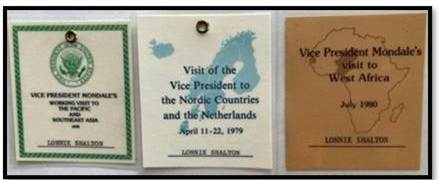
Above, baggage tags for my three international trips. My stops were Bangkok, Helsinki and Lagos.
I did not advance in the 1980 reelection effort. I was too busy at my new law firm.
The mix of high interest rates, Iran hostages and party dissension doomed the 1980 campaign. But as many historians now point out, Carter had many lower profile successes on women’s rights, the environment, the Panama Canal, social justice, etc. that resonate today. And of course, his extraordinary post-presidency is unmatched.
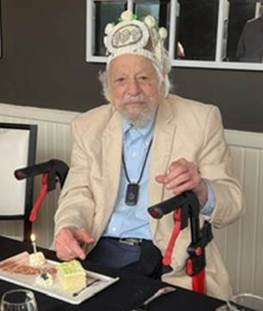
Judge Howard Sachs at 101: Another positive part of President Carter’s legacy is his 1979 appointment of Howard Sachs as a judge for the Western District of Missouri. Judge Sachs retired from the bench when he turned 100 last year. In his first year of retirement, he has read more books than anyone else I know and keeps us thinking with emails on current legal and political issues. He also continues to host a weekly Saturday lunch, a tradition that started decades ago.
Below, from last Saturday, a birthday lunch celebrating Judge Sachs at 101. The honoree is wearing a crown, and to his right is Mayor Quinton Lucas. The lady with the orange hat is Hot Stove’s managing editor.
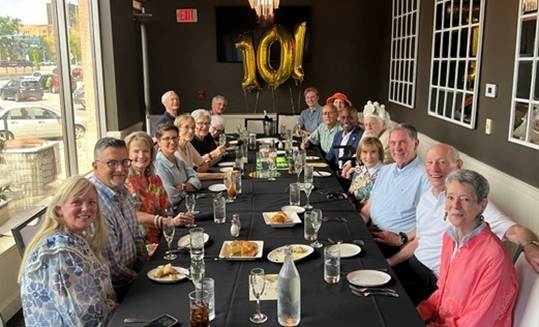
Judge Sachs and his “101” crown, but not 101 candles on the cake.
Lonnie’s Jukebox – The 1976 Edition: Here is a sampling from a big year in rock ‘n’ roll.
“Silly Love Songs” by Wings. The song was written by Paul McCartney as a rebuttal to criticism that he wrote lightweight love songs. He answered in his lyrics, “what’s wrong with that, I’d like to know.” Apparently, nothing was wrong. It was Billboard’s #1 song of the year.
“Don’t Go Breaking My Heart” by Elton John and Kiki Dee. The runner-up for song of the year.
“Afternoon Delight” by Starland Vocal Band. The song was written by band member Bill Danoff who got the idea from the title of the Happy Hour menu at Clyde’s in Georgetown, Washington, D.C. But his lyrics were about midday romance rather than the brie and spiced shrimp at Clyde’s. The #1 hit led to a Grammy win for best new artist. They never had another hit, or as they say, a one-hit wonder.
“50 Ways to Leave Your Lover” by Paul Simon. Written as a humorous response to Simon’s divorce from his first wife, the song listed only five of the 50 ways. This was Simon’s only #1 hit as a solo artist. He had three #1 hits with Art Garfunkel.
“Sir Duke” by Stevie Wonder. In September of 1976, Stevie Wonder released his blockbuster album, Songs in the Key of Life. This track from the album pays tribute to Duke Ellington and other music pioneers, “There’s Basie, Miller, Satchmo, and the king of all, Sir Duke / And with a voice like Ella’s ringing out / There’s no way the band can lose.”
“Bohemian Rhapsody” by Queen. Freddy Mercury’s “mock opera,” often considered to be Queen’s signature song.
“Hotel California” by the Eagles. This is the title track of the hit album Hotel California, released in December of 1976.
“Rhiannon” by Fleetwood Mac. One of their classic songs, written and performed by Stevie Nicks.
“A Fifth of Beethoven” by Walter Murphy. A classical music piece for Dan Margolies. Kidding. It is a disco take on Beethoven’s Fifth and was a hit in 1976. The link is to the song as part of the soundtrack in the 1977 movie Saturday Night Fever.
The Last Waltz: On Thanksgiving in 1976, the Band played its final concert, billed as “The Last Waltz.” The many guest performers included Bob Dylan who had recruited the group as his backup band for his first electric tours in 1965 and 1966. They then ventured out on their own as “The Band.”
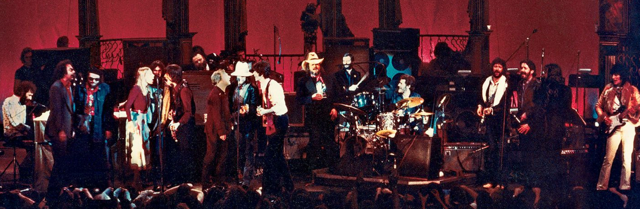
The concert was filmed by Martin Scorsese and became part of his 1978 documentary, The Last Waltz. The movie also includes a famous studio performance of “The Weight” with the Band joined by the Staple Singers (click on the song title for a superb performance that starts with Levon Helm’s distinctive voice followed by the gospel backup of the Staple Singers).
The 1976 Thanksgiving show was produced by legendary rock concert promoter Bill Graham at his Winterland Ballroom in San Francisco.
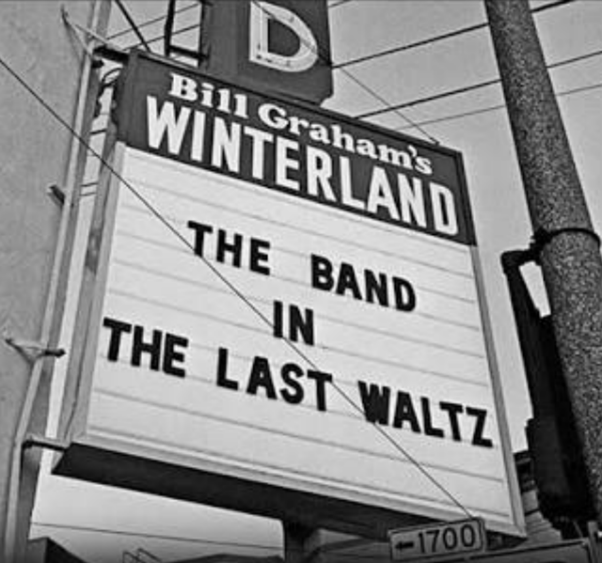
Seven months after Graham produced the show, he hosted a political fundraiser in San Francisco. Walter Mondale was the featured guest for the event, and I know this because I was there as part of the VP advance team. The guest list included the likes of attorney Melvin Belli and Mayor George Moscone. My local contact in organizing the trip was Nancy Pelosi, a California member of the DNC, ten years away from being elected to Congress.
Walk-Off Thought – Kansas: Don’t Throw Away Your Shot: Since 1976 was the bicentennial year for the American Revolution, I’ll finish by featuring one of our Founding Fathers.
As noted earlier, Hot Stove welcomes Republicans, Democrats and Independents. Sometimes, many from all three of these groups agree on a candidate, and maybe that will mean the first Democrat elected to the US Senate in Kansas since 1932. For example, Republican Bill Graves, a former governor of Kansas, has endorsed the Democratic candidate this year. And if this Democrat can pull it off, the “world’s gonna know his name.” What’s that name?
Adam Hamilton. His name is Adam…
Sounds like something you could set to music (click here). Confession: I am also a Hamilton (the musical) junkie.
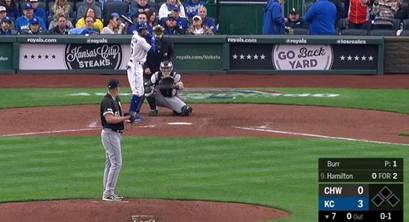
To circle back to baseball. On opening night at Kauffman Stadium in 2019, Royals outfielder Billy Hamilton faced White Sox relief pitcher Ryan Burr. Rather than a dueling distance of 10 paces, the two stood 60’6” apart. Hamilton grounded out but otherwise survived. The Royals (not to be confused with King George) won the game.
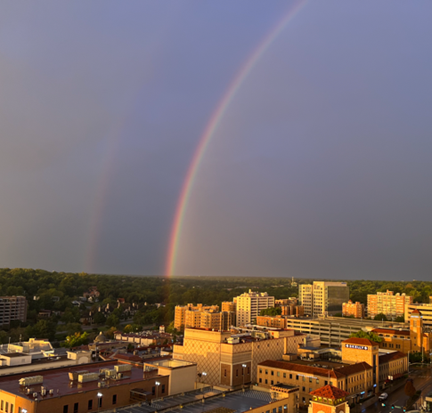
Walk-Off Photo – Plaza Rainbow: We usually see rainbows from our condo by looking east on a rainy afternoon. Last Saturday, we got a surprise morning rainbow to the west (along with a hint of a double rainbow).